Candida Martinelli's Italophile Site
Main
Page This family-friendly site celebrates Italian culture for the enjoyment of children and
adults. Site-Overview
Masks Gallery - New
This on-line company
offers a large selection of costumes for children, adults and in
plus sizes.
And visit my Costumes page for lots of
inspiring costumes for men, women and children.
Today's Carnival celebrations in Venice, Italy, are a new
'tradition' begun in 1979, run by a Carnival Committee, based around
a yearly theme, and last about 10 days in February. The old tradition of Carnival in Venice is very old. The
earliest mention of the celebration found in writing was in the year
1094. It stopped in 1797 when Venice lost it's
independence and became a dependent of the Austro-Hungarian Empire.
Private parties continued, but Venetians stopped any public
celebrations in protest at their status.
Old Carnival was more pagan, more violent, more licentious, and
more regulated to prevent dangerous abuses of the opportunity to
hide one's identity in public. In an age of greater violence,
no electricity, extreme poverty, and harsh living conditions,
allowing everyone to wear what amounted to a balaclava was
dangerous! Laws governed mask wearing all year round in
Venice, to ensure public safety. Many of those laws were
ignored during the period of Venice's economic decline, leading to
even greater licentiousness. Masks, or maschere, refers in Italian to
both a mask and a disguise. In Venitian it's more often called
bauta or bautta, which can refer to one of the most common mask
designs, or a whole disguise. But masks were commonly worn by persons socializing in Venice in
the evenings. People wished to hide their identities in a
society that was governed by strict social rules. Social shame
could kill a person's chances in life, and just about anything in
those socially repressive days could bring on social shame. If you read The Autobiography of Casanova, you'll see
numerous references to he and his female partner donning masks to
attend the Venetian Opera unchaperoned. Casanova is very careful to
protect his partners from shame, but even more careful to prevent
one of
his partners from discovering his other partners. Old Carnival was celebrated in the days leading up to Lent, the
Catholic season of fasting, prayer and donations to the poor.
The customs used for the celebrations were adopted from various
pagan festivals. Generally speaking, Old Carnival was a period of the year the
repressed people could let-it-all-hang-out; a pressure valve. Something similar
happens on the yearly visits to Lebanon that many Saudis take from
their highly repressive society. I've heard one Saudi call the
trip a 'chance to breathe freely for a few weeks' before returning
to the stifling atmosphere of Saudi Arabia. The Old celebrations ended on Shrove Tuesday, also called Martedi'
Grasso in Italian and Mardi Gras in French. Hence the
festival's commonly known name of Mardi Gras in former French
territories, like New Orleans in the U.S.A. As Venice's economy weakened after the discovery of the Americas,
and the growth of the Ottoman Empire, Carnival expanded to
up to six months of the year. This was to attract a tourist
trade of wealthy men who wanted to gamble, whore, and escape
responsibilities at home. During that time, Venice was
synonymous with sin, the Las Vegas of it's time. When Carnival was revived in Venice, a more artistic character
was conceived, while drawing selectively on the past traditions.
The current festivals include lots of theatrical presentations,
concerts, parades, shows and colorful costumes. It's as much
for tourists as it is for locals, just as it always was in the past,
too. You can visit these sites to learn about this year's Venice Carnival
schedule. Venice Carnival
Events 2011 in English
Carnevale di Venezia and
Bed & Breakfast Site in Italian
Carnival History etc. in English
Sipario - Carnival and
Costumes in English and Italian
There's a traditional
greeting when passing a person in costume.
Buongiorno Siora Maschera
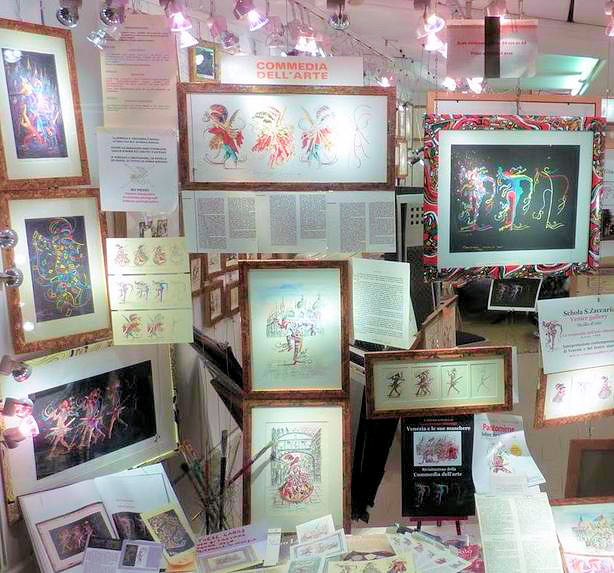
Venetian artists celebrate the Commedia dell'arte characters (masks) to
this day, mainly because they are popular costumes for Carnival.
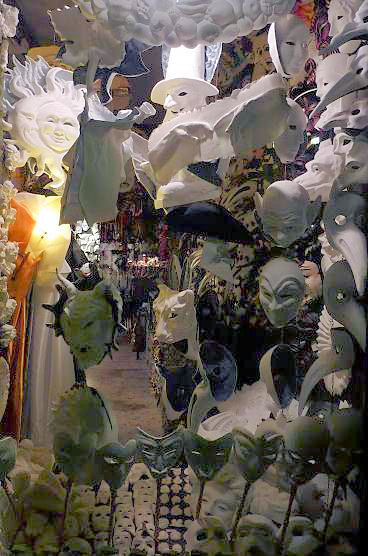
These are two shop windows photographed in Venice in 2011.
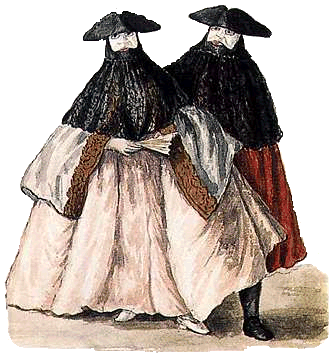
Venetian Inspired Costumes Bauta - Bautta
This mask and disguise is a standard one used to
hide sex and identity. The big chinned mask hides the whole
face but allows for conversation but with the voice masked too.
The cape covers the whole body, and the hat covers the head and
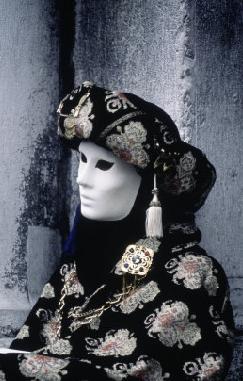
hairstyle. The costume called Larva, is a costume similar to the Bauta, but
the mast is white, with the rest of the costume all in black.
This makes the wearer look like a ghost roaming the misty streets of
Venice. This is the Larva.
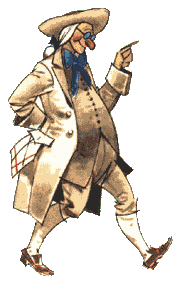
Fracanapa - Facanapa
This is a particularly Venetian character, a
seeming combination of the Commedia dell'Arte characters of
Pantalone and the Captain. Fracanapa is an old Venetian or
Veronese
merchant, avaricious, a glutton, coward, liar, boaster but who
outwardly shows great bonhomie. He's a common character in the
marionette and puppet theatres of Venice.
He's usually depicted as a dwarf in the puppet
theatres, wearing black knee britches, white stockings , a
3-cornered hat and a long black coat. The Carnival costume for Fracanapa has a parrot's beak for a nose, green glasses, a red tie,
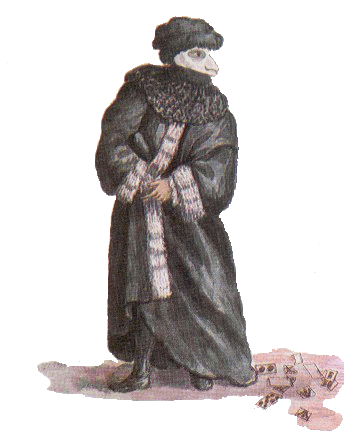
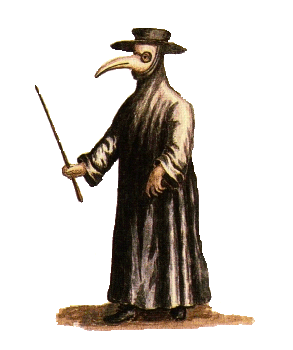
a white jacket, and the big hat. Plague Doctor - Medico
Taken from Venice's plague afflicted past, this
costume mimics the doctors who roamed Venice determining which
patients were doomed and destined for the plagued body dumping
ground on a nearby island. The big nose was filled with herbs thought to
protect the doctor from contracting the disease. As the
disease was passed by the bite of fleas, the mask in reality served
only to protect the doctor from the unpleasant odors of the city and
the dead and dying. At the peak of the plague, which hit Venice, a
sea-faring nation, first in Europe, 2/3 of the inhabitants of Venice
died, decimating the city-state and dooming it to lose it's
prominent place in the world of trade and finance. The Doctor, or Dottore, is also a Commedia
dell'Arte character. He is a Bolognese University trained
doctor who is learned and respected by others, but who in reality is
foolish, ill-educated as seen by his mangling of the language, and
prone to pointless, learned debates while his patients die. He
is known by many names, including Graziano and Balanzone, but the
character is always the same. Bernadon
Bernadon is a victim of the plague with bloody sores
and all, blood soaked rags, and a wooden leg. He is also said to be suffering from syphilis, or
as the Italians liked to call it, the Mal Francese. The French
liked to call it the Mal Napolitaine because Naples was the first
city in Europe to suffer from the virulent strain that arrived from
the newly discovered Americas, via the sexually rapacious sailors
who had been there. The new syphilis strain decimated Europe over the
centuries, causing still-births, infertility, chronic illness, early
death, and debilitating growths on the genitals. More than the
plague, which came and went without any explanation they could
discover, syphilis was the AIDS of that time, passed on by sexual
contact. Until the discovery of antibiotics at the end of WWI,
syphilis was treated mainly with mercury. That's why there was
a well-known saying: 'Spend one night with Venus (a prostitute);
spend a lifetime with mercury.' Mute Female Servant - Serva Muta
- Moretta
Women can hide not only their face and body with
this costume, but also their voice, as the mask has no hole for the
mouth. The cape has a hood, rather than have the woman wear a
man's hat. Women disguised as men were not approved of, and
actually forbidden by law. La Gnaga
This mask and accompanying costume is for a man to
impersonate a woman. Most times a costume allows for
impersonation, the impersonation is used to ridicule the people
being impersonated. This was the case with the Gnaga.
Men dressed as women and behaved badly, to make fun of women. Sior Tonin Bonagrazia
This is a foolish Venetian merchant, who played a
character in Venetian Commedia dell'Arte shows as well as puppet and
marionette theatres. He's very similar to Pantalone (see
below) of the Commedia dell'Arte. Mattacino
This is another costume used to attack women.
Dressed as a clown in a white or multi-colored costume, with a
feathered hat, these men considered themselves jokesters. They
would roam Venice pummeling women with blown egg shells filled with rose
water. They were outlawed at one point. Domino - Priest - Prelate
This costume impersonates a priest, so the wearer
can make fun of religious figures, who in Old Venice ruled society
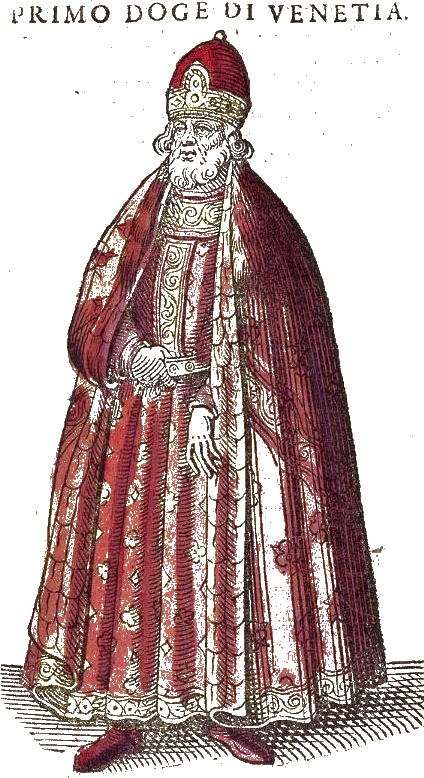
with a repressive, and often hypocritical, hand. Doge
The Doge was the head of the Republic of Venice's
government. I somehow doubt he was allowed to be ridiculed
during Old Carnival! Fantasy Characters
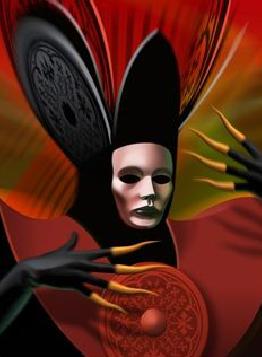
Fantasy costumes are usually full face and body
costumes that transform the person into an animal or fantasy
creature full of plumes of feathers, fur, and other props.
Some of the popular fantasy characters are/were cavemen (uomo
selvatico is also a Commedia dell'Arte character, above), jokers,
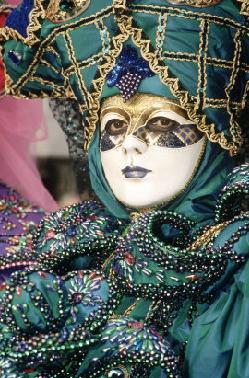
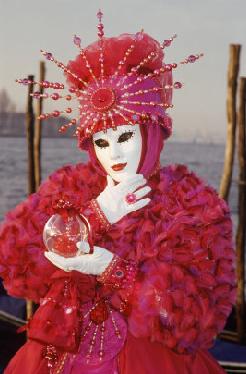
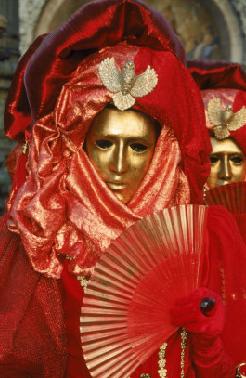
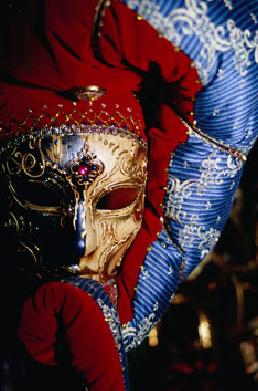
lions, birds. The posters and prints you see here on this page
of elaborate costumes are all fantasy characters. Commedia dell'Arte
Inspired Characters This uniquely Italian theatre was known throughout
Europe for hundreds of years as Commedia Italiana.
Stock characters peopled traveling theatrical troupes, which
performed a repertoire of comic and melodramatic plays for courts,
private merchant families and for the public. Sometimes the
characters took on different names but the characteristics and
costumes remained the same so they were easily recognizable to the
audiences. A theatre troupe would have a Zilbaldone or
Generici, a book of prepared speeches, scenes (lazzi), songs,
dances, riddles, complicated insults (ingiurie), burlesques (burle),
expressions, costumes and props associated with each stock
character. These would be interwoven at will by the actors as
they fleshed out the basic storyline, improvising whatever was
needed, or whatever the crowd seemed to enjoy most. No two
performances were the same. Many of these characters were depicted in the
popular marionette shows in appropriately sized theatres (Teatrino
delle marionette) and in the puppet shows on the streets of
Venice (Teatro dei burattini). Visit my page of
reminiscences by a traveler to
Venice in the 1860s
for what these theatres were like. These are some common Commedia dell'Arte
characters. (For children: the
SimonRossi.it site has coloring pages of many of these
characters.) Decadent Old Merchant - Pantalone dei Bisognosi
He is one of the oldest characters known,
originally as Il Magnifico, who together with the First
Servant, would entertain people in the streets for money from
passers-by. He is a Venetian merchant, old master, who is
pompous and foolish, rich and miserly, an indulgent father or a
sexual predator of young women. He's known also as Cassandro,
Zenobbio, Magnifico, Tartaglia (half-blind and stuttering),
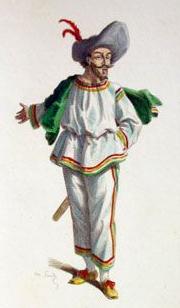
Tabbarino, Sior Tonin Bonagrazia (a very foolish Venetian). This is an image of Cassandro.
And an image of the half-blind and stuttering
Tartaglia.
Il Dottore - The Doctor
He is a Bolognese University trained doctor who is
learned and respected by others, but who in reality is foolish,
ill-educated as seen by his mangling of the language, and prone to
pointless, learned debates while his patients die. He is known
by many names, including Graziano and Balanzone and
Boloardo, but the
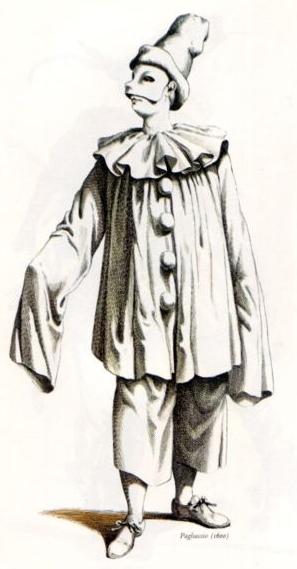
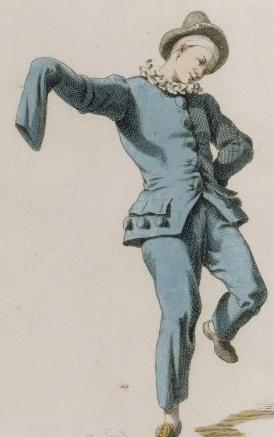
character is always the same. First Zanni - First Servant - Brighella
Traditionally in a theatrical troupes, and in most
plays they performed, there was a First Servant (Primo
Zanni) who was scheming, more clever than his master,
semi-serious, poor, illiterate, from Bergamo, and a busy-body. He went by
many names, but most commonly by Brighella, Mazzetino,
Giangurgolo, Gioppino, Tabarino, Pedrolino, Fritellino or Pierrot which is a later, more romantic version
of the same character. Here's an image of Mazzetino.
This is an image of Fritellino.
This is Tabbarino.
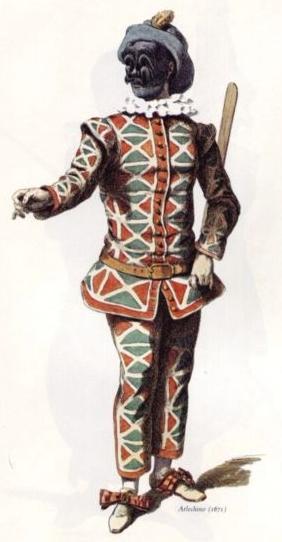
Second Zanni - Second Servant - Arlecchino
There was also a Second Servant (Secondo
Zanni) who was stupid, foolish, poor, easily distracted, easily
provoked into a fight, from Bergamo, sometimes carrying a stick, and
always hungry. This character is generally called
Arlecchino (Pulcinella is the Neapolitan version from which
comes the English puppet character Punch), but is also known as
Francatrippa, Polichinelle, Truffadino, Girandolaio, BeppeNappa
(Sicilian version), Trivellino, Stentarello (Florentine
version) or Burattino. This is an image of the Neapolitan Pulcinella.
Here's an image of the Sicilian BeppeNappa.
Here is an image of Florentine Stenterello.
A variation of Arlecchino popular in Venice puppet
theatres was the psychopathic character with the billy-club or
night-stick who beat people to death after befriending them, in
sang-froid, or cold-bloodedly, feeling no remorse what-so-ever.
Other character in this same vein if a bit milder at times, are
Ruzante, Macco, Fagiolino (Bologna, Dosseno, and Punch in England). This is an image of Ruzante.
Colombina - Zanni - Servant Girl
This is a female servant character, who is often
paired with the Second Servant as his wife (in English she became
Judy). She is often vicious, spiteful, wily, pragmatic, very clever,
and Venetian.
She goes by many names including Arlecchina, Corallina, Ricciolina,
Camilla and Lisetta. Loyal Maid Servant
A faithful personal maid to the Prima Donna who
helps her survive the melodramatic travails of the story.
Sometimes called Ragonda. Another version is Bela
Majin (Piedmont) who is the beautiful and loyal wife of
Bicciolano, dressed red with a long head veil. Good Natured Man Milanese usually, moral, dignified, wise and likes
the quiet life. He transforms from servant to merchant and
back again, and has several incarnations, such as Meneghino,
Gianduja (Torino), Bicciolano (Piedmont). This is Torinese Gianduja.
This is Piedmontese Bicciolano.
This is Milanese Meneghino.
Here is good Sicilian Pasquino.
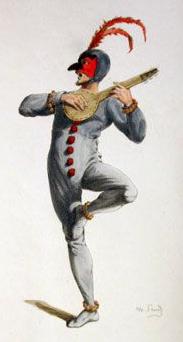
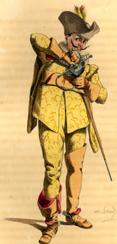
Zanni - Musician - Scapino Scapino is the most famous musical servant.
He's always depicted with an instrument. Coviello is
another musical character that has a generally silly personality in
whatever role he shows up. The French Scaramouche or
Scaramuccia character is often with an instrument too. This is Scapino.
Here's an image of Coviello.
And this is Scaramouche.
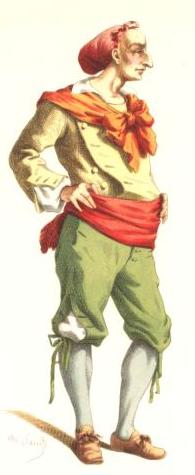
Aspirational Peasant This comic character had many names and
personifications, but the characteristics are the same. He has
a strong regional dialect and pretends to be better bred than he
really is. Beltrame, Sandrone. This is an image of Beltrame.
Wild Man - Caveman - Uomo
selvatico
Also call Uomo selvaggio. A primitive, hairy man who responds to all his
primitive urges. He's also used in plays as a wood nymph,
causing all kinds of trouble for unsuspecting people who happen upon
him. El Capitan - The Captain
The Captain goes my many names, but the most
popular is Capitan Spavento, image above. Spavento means 'fear' in
Italian, which describes his character well. The Captain is a
braggard soldier, vainglorious, Spanish or Neopolitan, a buffoon who
considers himself a prize for any woman, and who is timid in combat.
He's thought to be the basis of Shakespeare's famous character
Falstaff. He's known variously as Capitan: Coccodrillo,
Matamoros (more comical), Rinocerante, Narcisino, Scaramouche or Scaramuccia (France), Rugantino
(Rome), Giangugolo (Calabria), Meo Pattaca. This is Narcisino.
Here is Capitan Matamoros.
And this is Scaramouche.
Meo Pattaca is based on a Roman mercenary character from a
classic poem and play.
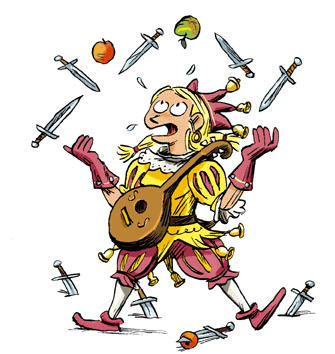
Saltembanco - Mountebank
This is the show barker, pitchman, salesman.
He roams the town streets trying to draw in the crowds into the
show. He would take part in a play by acting as the narrator,
or playing any charlatan that needed playing. Saltembanco
means jumps on the bench, suggesting he would often climb up on
benches to be seen and heard in the busy streets. The humorous
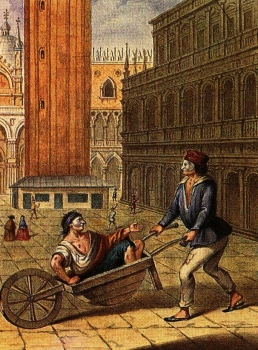
image above shows what the man might resort to in his job as barker. The Lovers - Gli
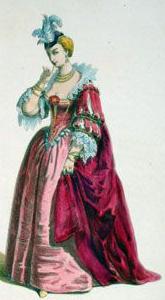
innamorati - Gli amorosi The first woman of a troupe, the Prima Donna,
usually played the female romantic lead. Each performance had
it's melodramatic element, star-crossed lovers, to please the softer
emotions of the audience. There was also a handsome,
masculine, young leading man to play her lover. They were both
cultured, beautiful, elegant and eloquent. They went by
various names like Flavio and Flaminia, Leandro and
Isabella, Silvia and Silvio, Fiorella and
Fiorello, Rosaura and
Rosario. Think of the old Marx Brothers movies. They
always had a story of young lovers in the middle of all the zany
mayhem caused by the Zanni, the Marx Brothers, who tried to get the
young lovers together while clashing with the establishment
characters such as Doctors, Rich Men and Women, and the Captains of
Police. This is Isabella.
Here's an image of Silvia.
Here is Fiorella.
There was often in a troupe a set of Second
Lovers, who many time played friends or rivals of the First Lovers.
The actors doubled for other characters when needed, and entertained
the crowds during the musical acts. A Dancer.
A Singer.
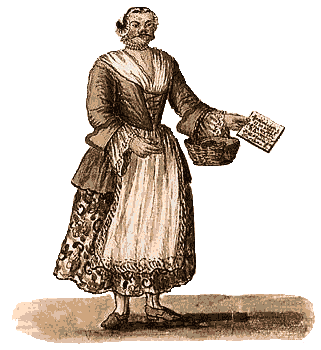
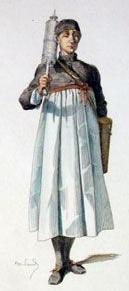
An Apothecary.
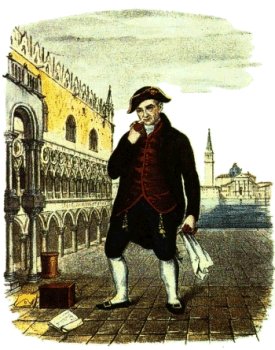
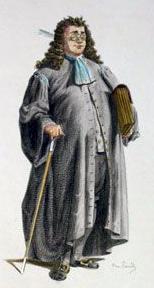
A Notary.
Click through to my Commedia dell'Arte
page for more. Visit my Costumes
page for more generic costumes you can purchase for parties and
Carnival.
This on-line company offers a large selection of low priced costumes for adults and in plus sizes. They ship around the world.
And they have masks, too. Here are most of the ones that would work best for
the Commedia characters. This Male Venetian Statue Costume includes the marble look tunic with the attached drape, belt, gloves, shoe covers and the molded hair headpiece. Make up instructions will be included with the costume. Make up available separately. Venetian Carnival Signore Costume for Men includes the deluxe long jacket in fancy grey and black fabric with black lapels, pocket flaps and cuffs, silver buttons and silver trim, attached shirt cuffs in white lace, a white lace jabot and the black satin knee britches. Gloves, stick, socks and white marquis wig available separately. Makes a perfect French King Louie XIV, Renaissance gentleman, Mardi Gras, or even a vampire costume. Dress your date up as a Contessa or Marie Antoinette for a truly regal couples look! Venetian Carnival Signora Costume includes the fancy dress with a ruffled lace neckline, wide lace cuffs with black bows, a black attached underbodice and skirt, and fancy grey overlay and peplum with all-over silver trim. Wig, gloves, shoes and stockings sold separately. Great as a Mardi Gras Costume or a Marie Antoinette costume, dress your date as Louie XIV for a couples look that'll have people losing their heads!
This Fancy Feather Mask in black and white features a brightly reflective silver body and a magnificent top embellishment of black and white feathers, and black sequined trim. Marvelous for a carnival costume! This Black and White Feathered Mask features a body of short black feathers, seequined trim about the eyes and a magnificent crown of sleek black and gold feathers. This fancy mask features a flared white feathered body, magenta sequined trim about the eyes and two proudly curving peacock plumes on the crown. Black and White Mask This Black and Silver Mask on a stick with red flower accent is great with a Vampire Costume or a Dia de Los Muertos Costume, Spanish Costume, Mexican Costume, or for a Masquerade Ball outfit! This Magique Half Mask is available in black (MASK138), silver (MASK137), red (MASK136) and gold (MASK96). This Magique Half Mask is available in black (MASK138), silver (MASK137), red (MASK136) and gold (MASK96). Silver and white venetian mask with iridescent sequin trim. Iridescent blue butterfly eye mask Venetian Mask - Purple Green and Gold Jester Mask Venetian Half Mask with Hat Red/Gold Mask with Feathers Marquis Costume Mask - Renaissance Costume Accessories Rigid Plastic Half Mask. Pixie Butterfly Mesh Mask - Costume Masks This Shedevil Half Mask is held in place by an elastic string that goes around the head. This Harlequin Half Mask is available in black, white, red, silver and gold. This Harlequin Half Mask is available in black, white, red, silver and gold. This White and Silver Feathered Mask features a white sequined body with silver sequined accents, an opulent feather spray and three magnificent shining silver flowers. Perfect for an angel or christmas costume! This Onyx Pearl Feather Mask in Silver and Black features a richly sequined silver body and black trim, a sleek black feather spray and rosettes and two long pearly streamers. This magnificent Spanish Peacock Feather mask features a red sequined and jeweled body and gold trim, sweeping flare of red and peacock feathers and a gold rosette with streamers of red ribbon and gold beads. This Black and Grey Feather Mask features a subtly reflective black body, black sequined trim and a spray of short black feathers capped by sweeping charcoal grey plumes. Perfect for any masquerade or ghostly costume! This magnificent black mask features a sunburst in silver and gold across a black mask, a silver jewel embellishment and sweeping black plumes. This Black and White Feather Mask features a pristine white body, silver sequined trim and a striking sweep of black and white feathers embellished with a clear jewel. This Black and Gold Feather Mask features a plain black body accented by a dramatic spray of plumes from the crown and a delicate fan of peacock feather forming a veil over the face. This Hand Held silver and red mask with red feathers features a bright silver spangled body, a red sequined trim and a coy feathered rosette over a dramatic spray of red plume. This magnificent mask features a sparkling gold body, gold sequined trim and a sweeping spray of red and black iridescent feathers embellished by a sequined gold flower. This Feather Mask in Mardi Gras Colors features a sparkling gold body with blue sequined trim and a ruff of jaunty green and purple quills. Perfect for a mardi gras costume! This magnificent Feather Mask in Mardi Gras Colors features a body of delicate spotted feathers in green, yellow and purple and then flares out into a mane of long quils in the same colours, crowned by soft downy feathers and a spray of proud peacock feathers. Truly a singular way to finish off your mardi gras costume! This extravagent mask features a body of small spotted black and hot pink feathers and a magnificent crest of black, green and red feathers crowned by proud sprays of peacock plumes. Marvelous for mardi gras! This handsome deluxe mask is adult sized and features a black body with gold trim. This Deluxe Adult Black Mardi Gras Mask features gold trim and fancy floral beadwork. This Deluxe Adult Purple Mardi Gras Mask features gold trim, feathers and tassles. Deluxe Adult Gold Mystique Mask with black feathers and gold trim. Great for a mardi gras costume! This Deluxe Adult Red Mystique Mask with feathers and gold trim features a beaded embellishment and an asymetrical line. This Deluxe Venetian Adult White Cat Mask with feathers and whiskers is great for any white cat costume, and also makes an excellent mardi gras mask! This Deluxe Adult Venetian Black Cat Mask with gold trim, a jeweled nose, plush and feather embellishment and whiskers. Great for a cat or madri gras costume! This Deluxe Adult Gold Mardi Gras Mask is the height of elegence and is sure to turn heads when paired with your mardi gras costume! This Deluxe Adult Gold and Black Sequin Mask features diamond shapes in gold trim and sequins and dangling ribbons and sequin streamers. Great for a jester or mardi gras costume! This Deluxe Adult Multicolor Sequin Mask features classic jester diamond designs in multicoloured sequins and dangling ribbons and sequins streamers. Great for a jester or mardi gras costume! Deluxe Black Mardi Gras Mask with lace and stones. This Deluxe Adult Black Sequin Mask with Stones features handsome black braid trim, sequined embellishments, bead fringe and rhinestone accents. Truly a mask for the royalty of carnival or mardi gras! This Deluxe Adult Fancy Gold Mask with gold trim is ideal for a mardi gras costume! This Deluxe Adult Venetian Gold Butterfly Mask features gold braid trim, silver braid and silver rhinestone accents, and a silver central embellishment. Great for a mardi gras costume! This Deluxe Adult Gold Venetian Butterfly Mask features gold braided trim and rhinestone and gold embellishments, and a gold sequined rosette. Great for a butterfly, carnival and mardi gras costume. This Deluxe Adult Venetian Black Cat Mask features a complex design, white braided trim, jetty jewels and marabou 'fur'. Perfect for a cat costume or a mardi gras costume! This Deluxe Mardi Gras Mask on Stick features the purple mask with green, gold and pink sequins and a spray of green, blue and gold feathers and matching streamers. This Deluxe Adult Black Mystique Mask features silver reflective dots, black sleek feathers, shining silver trim and an exotic dangling bead embellishment. This Black and White Domino Mask is of a classic design and is perfecto for completing your harlequin or mardi gras costume! This Black and White Burst Eye Mask will add a dramatic touch to any carnival, harlequin or mardi gras costume! This Black and White Checkered Domino Mask looks fabulous when paired with a carnival, mardi gras or harlequin costume! This Black and White Zebra Mask is a striking and unusual piece and would go smashingly with a harlequin, carnival or mardi gras costume! This opulent Pink Lace Mask features black lace overlayed a pink body, a sheer frilled trim, a black satin rosette and lace and satin ribbon streamers. This gorgeous Black & White Mask features criss-crossing ribbons studded with clear jewels. Ideal for a harlequin or mardi gras costume! This fancy Black Feather Mask features a sunburst of gold braid and shining black ribbon on a matte black base, a jeweled diadem and a spray of sleek black feathers. Ideal for a mardi gras or carnival costume! This classic Red & Black Venetian Mask features gold curlicues and red anc black diamon shapes on a créme background. Perfect for a harlequin or mardi gras costume! This Exotic Venetian Witch Mask features a bronze and purple colour finish over a white base and includes an eyemask portion and hat portion, edged with decorative tulle. Wonderful for a witch costume or a mardi gras costume! Venetian Mardi Gras Mask - Gold trimmed jester mask with musical note accents. Venetian Mardi Gras Mask - Green Purple and Gold Deluxe Black and Gold Jester Mask This festive Venetian half mask is two colored and a perfect fit for your made grass or masquerade costume. These next two online companies also ship worldwide,
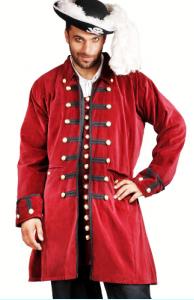
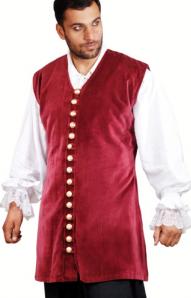
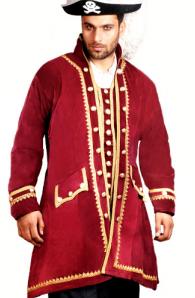
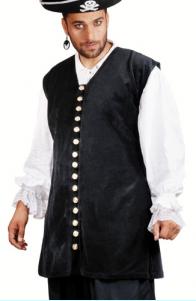
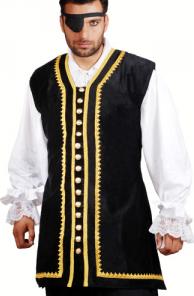
and specialize in Renaissance, Medieval and Pirate costumes.
Here are a few that would do well for Commedia
costumes, but click through to
the shop to see their full range of
beautiful women's costumes, too.


Carnevale
a Venezia
- Carnival - Mardi Gras

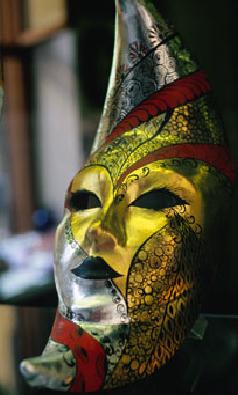
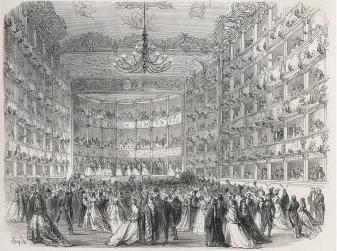

Short History
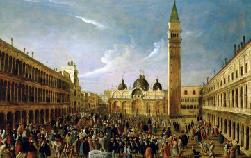
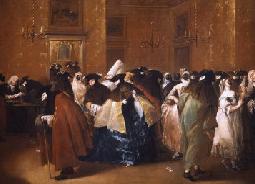
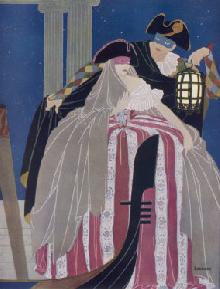
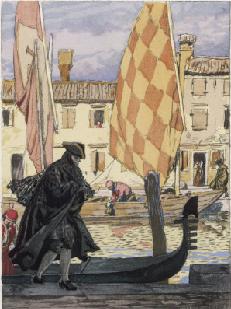
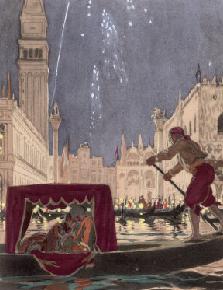
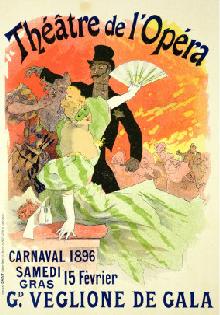
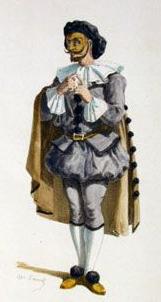
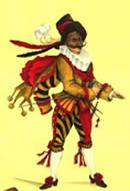
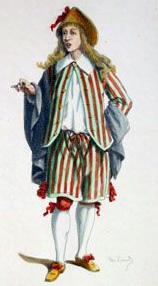
Common Costumes



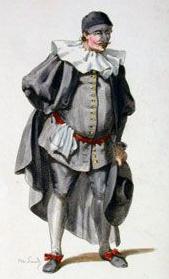
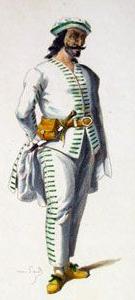
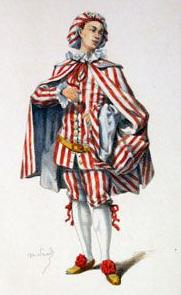
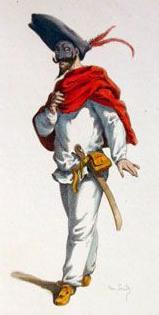
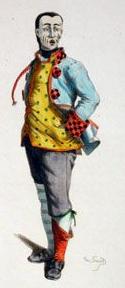
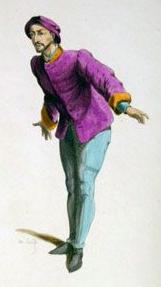

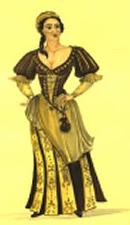
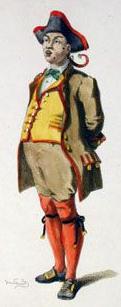
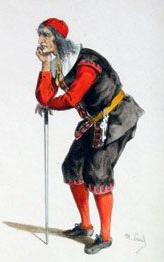
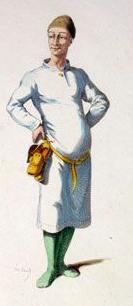
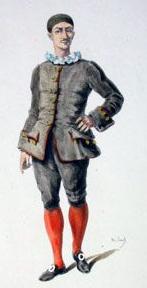
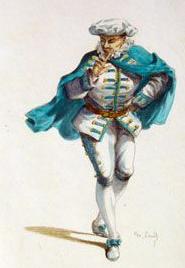


Costume Gallery
(to buy)


Fair Maiden Renaissance Costume - $ 104.95
Halloween Costumes for Women - This Super Deluxe Renaissance Costume includes the Renaissance costume dress, the hat and the overcoat.
Adult Renaissance Wench Costume - $ 98.95
Adult Halloween Costumes - This Adult Renaissance Wench Costume includes the mid-length Renaissance Wench Costume dress with attached top skirt drape, gold trimmed stretch velvet lace-up vest and the hat.
Super Deluxe Maid Marian Costume - $ 94.95
Halloween Costumes for Women - This Adult Maid Marian Costume from The Designer Collection features the headpiece with jewel, top with back lace-up, sleeves, skirt and the corded belt. Great couples costume with your man dressed as Robin Hood!
Adult Super Deluxe Medieval Maiden Costume - $ 92.95
This Super Deluxe Medieval Maiden Costume features the full-length panne gown with attached cape, sash and buckle, and the headpiece that can also be worn as a necklace. Necklace shown is not available.
Plus Size Baroness Costume - $ 72.95
Plus Size Halloween Costumes for Women - This Plus Size Baroness Costume includes the baroness costume dress and the headpiece.
Deluxe Arwen Dress & Tiara - $ 69.99
Adult Hallowen Costumes - This Deluxe Arwen Dress and tiara features the lovely and flowing Arwen dress and tiara. Available in size Adult Standard. Great for a couples costume with your man dressed as Aragorn! The dress is a pale green. 
Adult Baroness Renaissance Costume - $ 69.95
Adult Renaissance Costumes - This Adult Renaissance Baroness Costume includes the Baroness costume dress and the headpiece.
Deluxe Adult Renaissance Maiden Costume - $ 68.95
This Deluxe Renaissance Maiden Costume features the full-length gown and the headpiece with drape.
Plus Size Super Deluxe Musketeer Costume - $ 104.95
This Plus Size Super Deluxe Musketeer Costume features the shirt with attached gold satin trimmed apron, hat with feather and the boot tops. Pants not included. Sword sold separately.
Premier Harlequin Clown Costume - $ 99.99
Deluxe Clowns Costumes - Be happy, be playful in the delightful Premier Harlequin Clown Costume which includes the black & white stretch bodysuit with ruffled collar & cuffs, ruffled peplum, hat, black & white socks & white gloves. Small 33-34.5 bust, 25-26.5 waist, 35.5-37 hips Medium 35-36.5, bust 27-28.5 waist, 37.5-39 hips Large 37-39.5 bust, 29-31.5 waist, 39.5-42 hips XL 40-43 bust, 32-35 waist, 42.5-45.5 hips Excellent material and quality workmanship.
Renaissance Noble Lady Costume - $ 84.95
Halloween Costumes for Women - This Adult Noble Lady Costume from The Designer Collection features the hat with emblem and veil, dress with fur trim, beads, lined sleeves and the corded belt.
Plus Size Deluxe Renaissance Maiden Costume - $ 76.95
This Plus Size Deluxe Renaissance Maiden Costume features the full-length gown and the headpiece with drape.
Adult Renaissance Peasant Costume - $ 108.95
Adult Halloween Costumes - This Adult Renaissance Peasant Costume includes the micro-suede lace-up Renaissance Peasant costume vest, shirt, waist sash, pants and the boot tops.
Adult Brigadoon Renaissance Wench Costume - $ 109.95
Adult Halloween Costumes - This Super Deluxe Renaissance Wench Costume includes the shirt, Renaisance costume vest, the skirt with overpiece and the pouch. Can also be used as a pirate wench costume. Womens Large: Sizes 14-16. Costume runs big.
Adult Renaissance Woman Costume - $ 116.95
This Renaissance Woman Costume includes the Renaissance costume gown with smocked neckline and double skirt, vest with gold trim, hat, vinyl belt and the drawstring pouch.
Adult Super Deluxe Court Baron Costume - $ 118.95
This Super Deluxe Court Baron Costume includes the jacket with vest, pants and the neckpiece. Wig sold separately. Includes: jacket with vest, pants, neckpiece
Adult Super Deluxe Elegant Empress Costume - $ 149.95
This Super Deluxe Elegant Empress Costume features the full-length gown with elaborate collar, sleeve and bodice detailing, tiara headpiece with drape and the necklace.
Super Deluxe Renaissance Maiden Costume - $ 149.99
Adult Super Deluxe Renaissance Maiden Costume - Renaissance Costumes for Women - Adult Halloween Costumes - This fabulous Renaissance Maiden Costume includes the corset with attached sleeves, Renaissance costume skirt with attached sash and drape, and the Renaissance headpiece.
Male Venetian Statue Costume - $56.09 
Deluxe Venetian Carnival Signore Costume - $83.59 
Venetian Carnival Signora Costume - $58.29 Mask Gallery (to buy)
from Costume Craze


Red Half Mask with Feathers - $13.73 
Black and White Feather Mask - $8.25 
Black and White Feather Mask - $6.05 
White Feather Mask - $4.01 
Black and White Mask - $12.09 
Black and Silver Mask - $9.90 
Golden Flower Mask - $8.78 
Black Magique Half Mask - $4.39 
Silver Magique Half Mask - $2.20 
Womens White and Silver Venetian Mask - $11.53 
Butterfly Eye Mask - $6.03 
Venetian Mask - $32.95 
Gold Venetian Half Mask with Hat - $16.48 
Red/Gold Mask with Feathers - $8.78 
Marquis Costume Mask - $4.82 
Marquise Costume Mask - $4.82 
Pixie Butterfly Mesh Mask - $5.72 
Shedevil Black and Red Half Mask - $8.78 
Venetian Mask - $17.55 
White Harlequin Half Mask - $2.20 
Red Harlequin Half Mask - $2.20 
Winter's Eve Feather Mask - $13.19 
Onyx Pearl Feather Mask - $6.60 
Spanish Peacock Feather Mask - $14.29 
Black and Grey Feather Mask - $6.60 
Black and Silver Feather Mask - $7.15 
Black and White Feather Mask - $6.05 
Black and Gold Feather Mask - $7.15 
Red and Silver Mask - $6.05 
Red and Gold Feathered Mask - $6.60 
Mardi Gras Feather Mask - $12.09 
Mardi Gras Feather Mask - $8.79 
Peacock Feather Mask - $19.79 
Deluxe Black and Gold Mask - $15.35 
Deluxe Black Mardi Gras Mask - $7.68 
Deluxe Purple Mardi Gras Mask - $8.23 
Deluxe Gold Mystique Mask - $8.25 
Deluxe Red Mystique Mask - $8.25 
Deluxe Adult Venetian White Cat Mask - $8.25 
Deluxe Venetian Black Cat Mask - $8.25 
Deluxe Gold Mardi Gras Mask - $8.25 
Deluxe Gold and Black Sequin Mask - $9.35 
Deluxe Multicolor Sequin Mask - $9.88 
Deluxe Black Mardi Gras Mask - $8.25 
Deluxe Black Sequin Mask with Stones - $9.90 
Deluxe Fancy Venetian Gold Mask - $11.55 
Deluxe Venetian Gold Butterfly Mask - $10.45 
Deluxe Gold Venetian Mask - $9.90 
Deluxe Venetian Black Cat Mask - $11.00 
Deluxe Mardi Gras Mask on Stick - $9.67 
Deluxe Black Mystique Mask - $8.25 
Black and White Domino Mask - $6.05 
Black and White Burst Eye Mask - $6.05 
Black and White Checkered Domino Mask - $6.05 
Black and White Zebra Mask - $9.35 
Pink Lace Mask - $11.55 
Black and White Mask - $9.90 
Black Feather Mask - $11.00 
Red & Black Venetian Mask - $11.55 
Exotic Venetian Witch Mask - $20.90 
Venetian Mask - $21.43 
Venetian Mask - $18.68 
Deluxe Black and Gold Jester Mask - $16.48 
Red Venetian Mask with Hat - $17.03 
Two Color Venetian Mask - $12.65