Candida Martinelli's Italophile Site
Main
Page This family-friendly site celebrates Italian culture for the enjoyment of children and
adults. Site-Overview
A few feature hyphenated Italians around the world My Two New Italophile Sites
Italophile Book Reviews offers personal views on many books that
might interest lovers of Italy. Authors and Publishers: I
review books set in Italy, or about Italy and Italian culture, or about
hyphenated Italian culture, or Ancient Rome. My site is family-friendly. Indie (Self)
published books, and small publishing houses are welcome. Contact:
info @ italophiles.com Italophile Books is
an Amazon.com linked shop that has only products Italophiles are sure to
love. Shop with no distractions! You can click through to
the full Amazon.com site at any time, keeping your shopping cart.
Checkout is through Amazon.com's usual secure system.
Series Translated
from Italian
Michele Guittari / Michele
Ferrara
Carlo Lucarelli /
Inspector Grazia Negro
Valerio Varesi /
Commissioner Soneri
Luigi Guicciardi /
Inspector Cataldo
Gianrico Carofiglio /
Guido Guerrieri
Marco Vichi / Inspector
Bordelli
A Cozy Giallo by Candida
Martinelli
Series
Written in English
Edward Sklepowich
/ Urbino MacIntyre
Sara Poole / Francesca
Giordano
Beverle Graves Myers
/ Tito Amato
Christobel Kent /
Sandro Cellini Magdalen
Nabb / Marshal Guarnaccia
Tobias Jones / P.I.
Castagnetti
Lucretia Grindle /
Inspector Pallioti
Grace Brophy / Alessandro
Cenni
Timothy Williams / Piero
Trotti
Paul Adam / Gianni
Castiglione
Marshal Browne / Inspector
Anders
Timothy Holme / Achille
Peroni
John Galavan / Art
Theft Kindle Series
Margaret Moore / Dr.
Ruggiero Girolamo
Diane A. S.
Stuckart / Leonardo Da Vinci
George
Herman / Leonardo and Niccolo
Traci Andrighetti / Franki Amato
Beate Boeker / Carlina & Stefano
Also see my
pages:
Historical
Novels set in Italy If you're interested in books set in Italy, but not necessarily
mysteries, you can use this Search tool to find what you are looking for
from Amazon.com. Just enter 'Books' in the 'Search'
field, and something like 'thriller Italy' in the 'Keywords'
field. Then click on the 'Go' button to see the list of thrillers
set in Italy, or having to do with Italy. You can combine 'Italy' with whatever
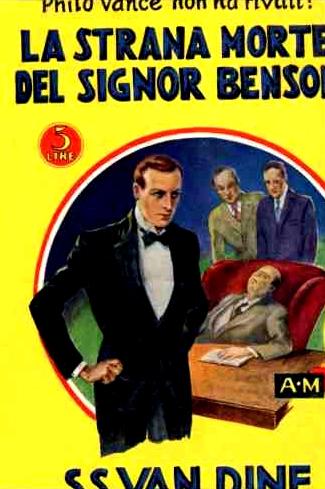
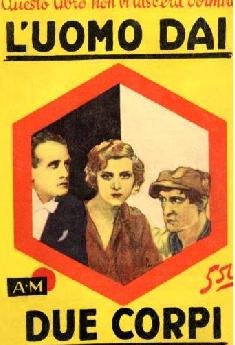
genre interests you: biography, history, humor, inspirational... Giallo is
Italian for the color yellow, and this was the color of the covers on
police thrillers and mysteries printed in Italy for quite a long
time. Since then, the book cover color has became the common name
for a mystery or a police thriller in book and any other
form: un giallo, gialli. The Fondazione
Franco Fossati has a great reference page, in Italian. These
two images are from that site, which is well worth a visit.
Some of these series are out-of-print, but well worth looking for at
secondhand dealers like
Better World Books, who
ship worldwide for free. This link goes to the Amazon.com Kindle page for Italy
Mysteries: Kindle Italy Mysteries
Edward Sklepowich's detective is amateur sleuth and longtime Venice
resident Urbino MacIntyre. MacIntyre is an ex-pat from the
States and an author of biographies of Italophiles who have lived in
Venice. His partners in sleuthing are an Italian
Countess and Venice, both beautiful and glorious. Mr. Sklepowich is a solid writer who leaves no loose ends, and who
writes in the style
of the classic mystery writers. His books are not police procedurals, but
are the classic three act mysteries, with the murder happening at the end of
Act I, after we've met all the potential suspects. Lengthy
ruminations on facts uncovered fill Act II. And the killer is
revealed at the end of Act III, followed by an Epilogue that wraps up
all the loose ends. The author peppers his books with literary and historical references
that will stimulate readers, who have similar interests, to rush to
references and to read books, to flesh out the backdrop of the mystery
series stories. The extra research is not necessary to enjoy the
stories, but it just an extra level of intellectual entertainment
provided by the erudite author. The books in the series are to date:
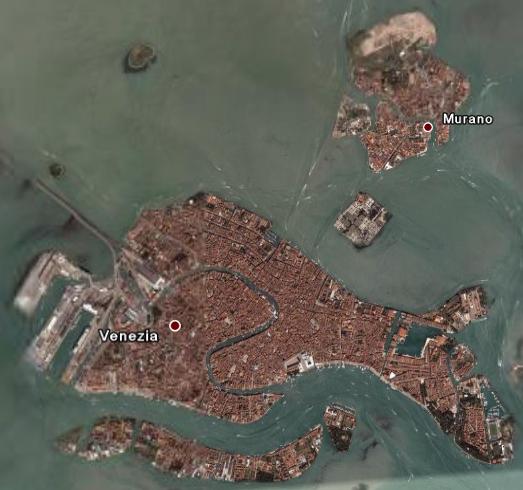
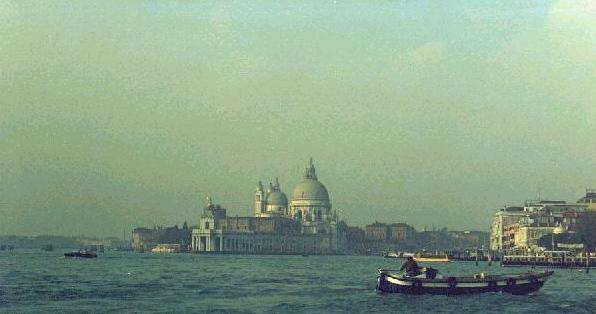
Venice from above, the setting for this series.
The author was and is inspired by Henry James. Jamesian motifs,
allusions and direct references dot all the books in the series.
Mr. Sklepowich's first proposal for
the series was to have Henry James as the sleuth. I
imagine the Contessa character might have been originally intended as
Mrs. Arthur (Katherine) Bronson, a famous ex-pat society hostess and
philanthropist who lived in Venice for twenty
years, had a Grand Canal villa, and who was a close, platonic friend of Henry James.
Sklepowich departs from Henry's model during the course of the
Urbino MacIntyre series. But there are plenty of Jamesian
references to Urbino as a "monk" who retreats to his Venetian palace as
if it were a "cell", and to Urbino's good manners, kindness, modesty,
need for privacy and personal freedom, and his reticence about his
sexual life.
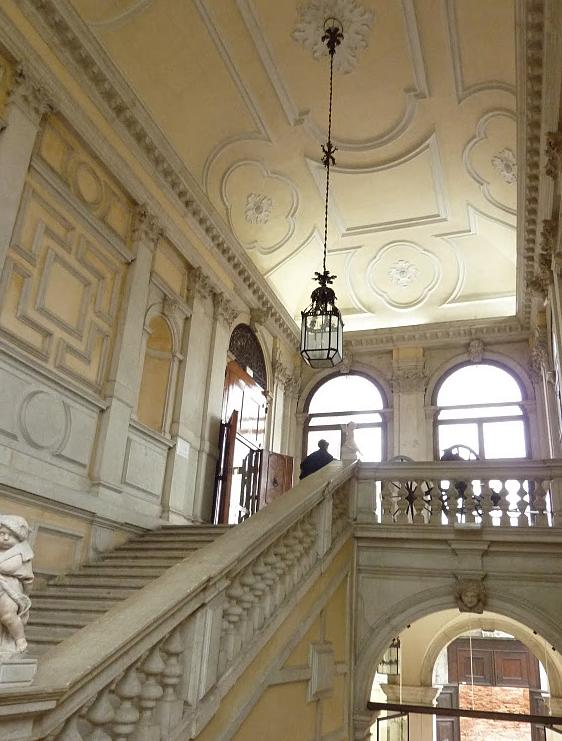
The main staircase of Ca' Rezzonico.
Urbino's sexuality is downplayed and never spoken of directly.
Only subtle allusions are made to or about it. In fact, Urbino is
said to approve of lies, presumably about private things such as
sexuality, in this imperfect world of ours, because the truth might
cause too much damage to the innocent.
The gentle, tactful and
intelligent way Mr. Sklepowich deals with this aspect of his Urbino
character (and other gay characters in the books), is a real plus to the
novels, in my opinion. It adds a lovely, allusive undercurrent
to the stories, much like the Jamesian references do. The Last Gondola feels inspired by
Henry James's novella The Aspern Papers, and it explores certain
aspects of Urbino's character that were inspired by a decadent fictional
character, des Esseintes, created by the French writer Huysman, in his
novel A rebours (Against Nature or Wrong Way). The canal-level entrance to the Grand Canal palace Ca' Rezzonico.
Visit my
Italophile Book Review page for this series.
Donna Leon authors a police procedural series set in Venice
featuring Guido Brunetti, a vice-commissario of the Venice police.
I've read many of the Brunetti series books. Ms. Leon's books have become progressively more offensive in
the views espoused by her characters, often having nothing to do
with the plot.
Those views are unpleasant, to say the least, concerning: Roma or Rom,
southern
Italians, Milanese,
people who believe in God,
Germans, tourists,
people with cosmetic surgery, French, housewives, Chinese immigrants eastern Europeans, animal welfare people, business people,
people with weight
problems, journalists, and most especially,
U.S. Americans.
The books in the series seem less polished as they continue, in my
opinion.
The books come across as rush jobs. Her editor seems to have done
nothing more than look for typos. I've even seen a reader review
or two of the last books who suspect a ghostwriter is writing the books
now. Visit my
Italophile Book Review page for this series.
By Its Cover
is book number twenty-three in the Commissario Guido Brunetti Mystery
Series set in Venice, Italy. The Italian setting is the reason I
requested a review-copy of this police procedural novel. Strongest in the book are the descriptions of local
places and the details of local customs. Commissario Guido Brunetti's
love a literature and history takes center stage in By Its Cover,
the title taken from the expression "You can't judge a book by its
cover." There are lots of long reflections by Brunetti in
By Its Cover. Actually, most of the book is made up of
ruminations by Brunetti. The third person narration, is limited to
Brunetti's state of mind, so we get a front row seat to every twist and
turn of this thoughts. The author is a former English teacher, so one
would expect the English to be of a high standard. I noticed a few
confusing uses of the pronoun "he", but overall the English is of an
excellent standard. What a joy to see a writer using the full set of
punctuation marks, and using them correctly! Do not expect a fast-moving police thriller. By
Its Cover moves slowly, as slowly as Commissario Brunetti moves
through his native Venice when not fueled by a recently drunk espresso.
It reads as if several chapters at the end of the
book are missing. The case is resolved in a perfunctory manner.
However, Brunetti usually treats us to a detailed explanation of the
case, and some philosophical ruminations about the case and humankind,
then he seeks solace with his family. How odd! Read my
full review at
Italophile Book Reviews.
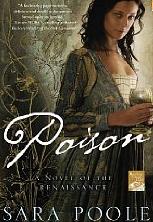
Poole’s
novel begins this historical-mystery series starring Francesca
Giordano, a young woman who takes over her father’s job as head poisoner
for the Borgia family. Working for Cardinal Borgia as he attempts to become pope is a deadly
and dangerous business—Francesca’s father is already dead in mysterious
circumstances, and threats lurk everywhere. But Francesca has one key advantage; no one takes a
woman seriously. That’s unfortunate because Francesca happens to be one
of the greatest poisoners in late-fifteenth-century Rome. These are the books in the Poisoner Mystery series so far:
This is the first in a series of historical mysteries set in
mid-late 1700s
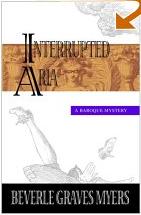
Venice featuring an opera singer as the amateur detective. Tito
Amato is no ordinary opera singer. He is a castrato, a male
soprano, created by a surgeon's knife. His multi-octave voice has
a power that female sopranos can only envy. The price? He
can never marry in a Catholic ceremony, nor can he father children. From a Reader Review: "Filled with lush description of Venice
during Carnivale, its political and social structure, the inner workings
of the opera company and Tito's relationships with his family, friends,
colleagues and himself, this is a rich, wonderful book. I also found it a good mystery with a couple of twists and some good
suspense. This is a series I shall definitely follow." Here
are links to the other entries in the "Tito Amato" series at Amazon.com:
Tito Amato Series Books in order of publication:
I have read the first five books in this series and I
recommend them highly (C.M.).
The author is a wonderful writer who manages to create vivid
characters set in an era long ago that comes to life in the writer's
capable and erudite hands.
Her wonderful imagination is a joy to behold. While at times the mysteries are not so mysterious, I've read each
book to the end, if only to enjoy the characters, setting, and
delightful writing.
Some of the books end on very somber notes, which I didn't enjoy, but
the journey getting there was always entertaining. I especially respect the writer for writing the books in the
1st-person-narrative style, as if we were reading her character Tito
Amato's memoirs about his amateur detective cases.
So many writers these days use the 3rd-person-limited style (the "I"
turned to "he"), that it is refreshing to read a book in an undisguised
1st-person-narrative style. It brings us closer to her unique
protagonist.
My favorite book in the series is the last one, published in 2009,
Her Deadly Mischief. I look forward to reading the
latest one, Whispers of Vivaldi!
Note:
The links I offer are to Amazon.com. But I recommend you look
for these books either at the
Poisoned Pen Press website, or for
great prices, secondhand, from
Better World Books, who
ship worldwide for free.
Visit my
Italophile Book Review page for this series.
Hewson's protagonist, Nic Costa, is a young state police officer in Rome, Italy.
As is the case with many protagonists in gritty, seedy police thrillers,
Nic gets the crap kicked out of him, physically and psychologically, regularly while working complex cases
in Rome, and once in Venice. The writing reminds me of John Le Carre because of the
omniscient narrator who creeps inside the minds of even the sickest
characters. But Hewson takes it further, and puts us, at
times, even into the minds of the murder victims as they die. He
also explicitly describes sex scenes to the point of pornography. Nic Costa Series books in order of publication:
Visit my
Italophile Book Review page for this series.
Sandro Cellini is a former Florentine policeman (disgraced and forced
to leave the force) who now makes his
living as a private investigator in Florence, Italy. These are the books in the series so far (all available as Kindle
books):
From the book description of the first book in the series by an Irish
writer who lives and works in Rome: "In this accomplished and riveting thriller, police inspector, Alec
Blume battles organized crime, political pressure, and his own demons as
he investigates the death of Arturo Clemente. Blume, a clever American expatriate with a disposition against
authority, soon realizes that he is being watched from on high.
Forced to negotiate with powerful, suspicious people on all sides of the
law, Blume must rely on instinct, drive, and luck to find the killer. Blume is... intelligent but flawed, cynical but unafraid. He is
a trustworthy and compelling protagonist for this first installment in a
gritty and promising series." These are the books in the series, set in Rome, so far:
Iain Pears writes a series featuring art historian Jonathan
Argyll and the woman who becomes his wife during the run of the
series, Flavia di Stefano, a member of an Italian police squad that aims
to prevent the theft of art from Italy's famous museums, private
collections, and churches. Flavia's boss, Bottando, is also
a recurring character and a father figure for Flavia. Of all the series on this page, I have
to admit this is one of my favorites. The point of view alters
throughout the books between the three recurring characters, to
entertaining effect. Mr. Pears uses a light
touch, plenty of humor, and appears to savor his unorthodox
protagonist. Argyll is gangly, awkward, obtuse, lazy and now very good at his art
dealer job. He does have the ability to be in the wrong place at
the right time, however, and is very good at stumbling along to a
clever conclusion of the mystery. There are seven books in the series, that is often referred to as the
Art History Mystery Series. The last book was published in 2000
and I doubt there will be any more in the series.
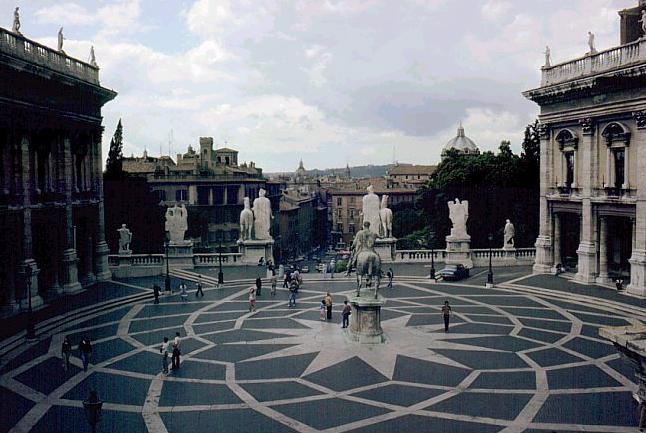
Piazza del Campidoglio in Rome, the seat of the
Italian government and a setting that occurs from time to time in Pears'
books . The Raphael Affair: In the first book in the series, we
are introduced to Jonathan Argyll, an enthusiastic young art scholar
from England who has followed his suspicions about a long-lost Raphael
painting to a small church in Rome. Not only is the painting in
question gone from the site, it has been swiftly purchased, restored,
auctioned, and installed in Rome's National Museum. But when the
recovered Raphael is just as swiftly destroyed in a fire, Argyll begins
to suspect its authenticity…and the innocence of every person in its
path. The Titian Committee: When a murderer strikes down an
American member of the prestigious Titian Committee in Venice, General
Taddeo Bottando of Rome's art-theft squad dispatches special assistant
Flavia to gather information. What begins as a simple political
mission becomes a dangerous quest for a missing portrait attributed to
Titian. She enlists the aid of art dealer Jonathan Argyll, who has
become her friend, despite her signals that she would welcome something
more. The Bernini Bust: British art historian Jonathan Argyll
is in sunny Los Angeles conducting some profitable business with the
Moresby Museum, the sale of the Titian from the previous book. The museum's owner is murdered
, a Bernini
bust disappears, and a friend of Jonathan's is suspected of the crimes.
While awaiting the arrival of his friends
from the Italian National Art Theft Squad, Jonathan finds himself
targeted by the killer. More romantically crossed signals between
Flavia and hapless Jonathan. The Last Judgment: Jonathan Argyll, British art dealer
and sleuth, delivers an obscure 18th-century painting to a Parisian
dealer's client in Rome. The client, however, ends up dead. Argyll
and his now fiancée, Flavia de Stefano, (they finally got their signals
alighned) pursue the murderer as well as
information about the painting. Giotto's Hand: General Bottando of Rome's Art Theft
Squad believes a lone criminal mastermind-dubbed "Giotto" has been
stealing priceless Renaissance art for over 30 years. Bottando's
right hand, the beautiful Flavia di Stefano, quickly locates a possible
culprit but he's in England. Flavia relies on her fiancé, English art
dealer Jonathan Argyll, to track the man down, which of course leads to
all manner of disasters. Death and Restoration: General Bottando has received a
tip about a planned raid at a nearby monastery. He's relying on
his colleague Flavia di Stefano and her art-expert fiancé, Jonathan
Argyll, to thwart the plot, but both are beyond baffled. The Immaculate Deception: For newlywed and Italian art
theft squad head Flavia di Stefano, the honeymoon is over when a
painting, borrowed from the Louvre and en route to a celebratory
exhibition, is stolen. Across town, her husband, art historian
Jonathan Argyll, begins an investigation of his own, tracing the past of
a small Renaissance painting -- an Immaculate Conception -- owned by
Flavia's mentor, retired general Taddeo Bottando. My list of this author's
books at Amazon.com Visit my
Italophile Book Reviews page for this series.
British expatriate Magdalen Nabb wrote a police procedural
series set in her adopted hometown, Florence, featuring Marshal Guarnaccia of the Carabinieri. He's a modest, unambitious
type who nevertheless succeeds with plodding police work, moments of
inspiration, and deep compassion. My list of this author's
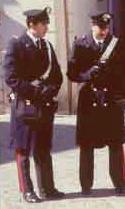
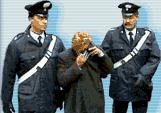
books at Amazon.com The Carabinieri are actually a branch of the Italian
military that reports directly to the Italian head of state, the
President. They were set up soon after Italian unification and
patterned on the French Gendarmerie.
To read more about Ms.
Nabb and her books, click here
to link to
her page on a British mystery site.
Ms. Nabb passed away in 2008. You can
read a lovely endorsement of her work
here.
And like all the books on this page, I suggest you look for
them, at wonderfully reasonable prices, secondhand, at
Better World Books, who
ship worldwide for free.
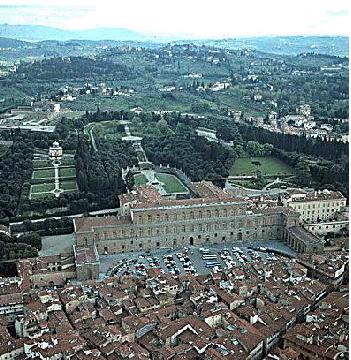
Marshal Guarnaccia's office is part of Pitti Palace in
Florence. It's the part protruding on the left, a Carabinieri
office, in the books, I'm not sure in real life.
Carabinieri and their "Gazzella" and
helicopter, like the ones used by Marshal Guarnaccia in Florence, click
on the helicopter to go to the official Carabinieri site (in Italian). Visit my
Italophile Book Reviews page for this series.
Michael Dibdin wrote several Aurelio Zen police
procedurals set in various locations in Italy. I've read
Cosi Fan Tutti, but it didn't make me a fan of the series.
Rather too butch and lacking in compassion for my tastes. To read more
about Mr. Dibdin and his fictional police inspector Mr. Zen, click here. This links you to Mr. Dibdin's
page on his publisher's site. The first three books have been adapted to television as films for
British television. Oddly, unlike the British adaptation of the
Swedish 'Wallander' mystery books, where all the actors are British, the
adaptation of 'Zen', as it is called, mixes British actors with Italian
actresses. While this may be 'nice' for the production staff and casting
directors, it does disrupt the suspension of disbelief that all those
Brits wandering around Naples fighting crime and/or acting corrupt are
really Italians. When you have Zen with his neutral British
accent, affected by the star, Rufus Sewell, talking with a hot female
suspect (and lover) who answers him in what sounds like an impersonation
of Sofia Loren, I can't help but think: "Why the Hell are British
cops policing Italy?" Here's a clip. See what you think: Sadly, Mr. Dibdin passed away in 2007. The last book in the Aurelio
Zen series was publish posthumously: End Games. My list of this author's
books at Amazon.com Visit my
Italophile Book Reviews page for this series.
Orphaned, school of hard knocks trained, Private Investigator
Castagnetti (Casta) is a stubborn, iconoclastic hero. He works
cases his own way, sometimes to the detriment of his clients. He
operates in Italy's north and the books are set in present day Italy, with all its
warts and charms. These are the books in the series so far:
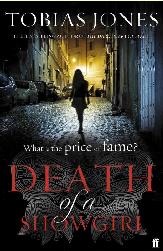
The subtitle of Death of a Showgirl is
What is the price of fame? The quest for "showgirl" or vedetta
celebrity by young women in Italy is the subject of this hard-boiled,
private-investigator novel. A "showgirl" in sexist Italy is nothing
more than skimpily-clad eye-candy on the TV screen, while the sleazy
male hosts of the TV shows do all the talking, gawking and groping. The author of Death of a Showgirl is
familiar with Italy's criminal underbelly, having researched and written
Italy-set true crime novels. His P.I. novels mine the same ground.
Death of a Showgirl is clearly inspired by the former Italian Prime
Minister Silvio Belusconi's salacious, sexist and stupid misadventures
and crimes during his climb from property developer to TV producer, TV
mogul, media mogul, on to political party leader and prime-minister.
The author's Berlusconi-inspired character in Death of a Showgirl,
a "stocky man in a double-breasted suit", is wonderfully drawn. Like the Los Angeles based P.I. of yore, Casta
moves among the creeps who populate the under-belly of society, while
working for the well-off, who live behind walls and titles and big bank
accounts. Casta also deals with those in the middle of society, often
good-hearted people who have been ground down by society or evil
people. The macho creepiness of Italy's male elite is
superbly drawn by the author, showing the easy excuses they make for
their self-indulgent infidelities, and the sense of belonging to a
virtual, cool, all-male club with sexual privileges. Anyone who
criticizes them is just "not cool". An Italophile loves the history and rich culture of
Italy, not the modern-day government that runs the country, or the weak
economy and jobs market, or the lack of equality and respect for Italy's
women. If you can handle the truth, and you enjoy traditional
hard-boiled P.I. novels, then you should enjoy Death of a Showgirl
and the other books in The Castagnetti Series. Read my
full review with illustrations at
Italophile Book
Reviews. Inspector Alessandro Allioti works diligently to resolve cases that
might have links to crimes committed in the distant past. His home
base is Florence. These are the books in the series so far:
Commissario Alessandro Cenni works in hilly Umbria for Italy's State
Police. These are the books in the series so far:
This police procedural series consists of 5 books (with a possible
6th)
about the life and work of Commissario Piero Trotti who works in a
fictional Po Valley city. The books cover much of post WWII
Italy's history. Trotti is a rather dour character whose only
satisfying relationships are with his colleagues. Soho Crime is
reissuing this series! Here is the description for the first book
in the series: A small-town kidnapping presents a major problem for Commissario
Trotti—and draws us into CWA Award winner Timothy Williams' debut,
set against the rich backdrop of a provincial Italian city. Meanwhile, an estranged friend
approaches Trotti with a desperate personal plea: his six-year-old
daughter—Trotti's own goddaughter—has been kidnapped. In the wake of
the high-profile February 1978 kidnapping of Aldo Moro, president of
Italy's majority party, whom the police have been utterly helpless
to solve or prosecute, faith in law enforcement is at an all-time
low, and it's no surprise the distraught father doesn't isn't
willing to take this matter to the police. The books in the Commissario Trotti series: I will put links to Amazon.com when the new books go on sale,
probably by end-2015.
In the meantime, you can visit Timothy Williams's
website for
information on his new novel set in Guadeloupe, and on the
Commissario Trotti series.
Williams is a very visual storyteller, in brief descriptions of
setting and action between the realistic conversations and Trotti's
own somewhat melancholy inner dialogues. The characters are not
types, they are fully realized, and the setting is solidly anchored
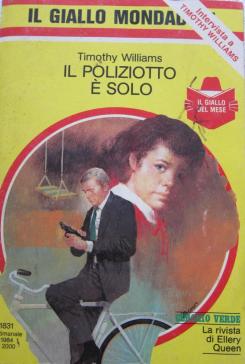
in Italian social history. Interestingly, the first book in the series has been released in
Italian as part of Mondadori's Giallo series, a series of detective
stories published with the traditional yellow cover that gives its name
to mystery/detective stories in Italy (gialli). Oddly, they
changed the title of the book to Il poliziotto e' solo (The
Policeman is Alone), and apparently on a bicycle! Until the new release, you can look for secondhand editions on-line
at Better World Books,
which offers free international shipping (actually, the shipping price
is included in the price of the book)
This series has a unique amateur detective. Gianni Castiglione
is an aging luther, a maker and restorer of violins. He live in
Cremona and spends most of his time adoring his grandchildren and
playing chamber-quartets with the local priest, the chief of police...
Well, you can see that the police chief draws Gianni into cases that
have to do with violins. These are the books in the series so far:
Peter White is a private security consultant working in Italy.
Here is the author's blurb: "Peter White mysteries will intrigue
you with their twists and turns, while fascinating you with high
technology and state of the art techniques, and tempting you with exotic
locations and enticing meals. If you’re a foodie, a techno-mage,
an armchair traveller, an amateur sleuth or just enjoy a good yarn,
you’ll love these books." These are the books in the series so far:
Inspector Anders has one leg and works for the Rome State Police at
the beginning of the series. Then he works for Interpol. As
you can see, the man has traumas and lots of police experience. He
is pushed to the edge of his life and sanity regularly. These are the books in the series so far:
The author has sadly passed away, but he leaves us with a lovely
five-book series set in Italy's troubled 1980s about a southern Italian man who works for the State Police in Verona.
I've read the first book in this series, The Neapolitan Streak,
and I enjoyed it immensely. The protagonist, Inspector
Achille Peroni is a unique and fun character. The author
lets us get inside the head of this gorgeous Neapolitan man, where we
discover his vanity, ample ego, dual character of former
child criminal and today's honorable policeman, Anglophile,
poser, publicity hound, loving brother and uncle, and his innate desire
to uncover the truth. The author uses the 3rd person limited narrative
style, but he moves the point-of-view between the
characters so we get an insight not only into Achille, but of
how others view him. This technique lets us see the hostility a
southern Italian can suffer in Northern Italy, but also the view of the
southerner to the Northerner's character, which adds another level of
enjoyment to the stories. The author uses a light touch, employing
humor and irony, and he clearly loves to share the details of
everyday Italian life with outsiders. His take on Italians is
affectionate but honest.
Italy is a country of stark contrasts in landscape, the physical
characteristics of her people, and in the characters of the 20 patchwork
regions that make up modern Italy. The readers gains an insight
into what it is like to live inside the skin of Italians, at least for a
little while, until the crime is solved by Inspector Achille Peroni, the
"Rudolph Valentino of the Italian Police".
This is from the description on the first book in the series The
Neapolitan Streak:
"Achille Peroni loves the spicy food and passionate arguments of
southern Italy, land of his birth. But fate -- and the Italian police
force -- have stuck him in Verona, a city of bean soup and endless
problems with the Red Brigades, a vicious gang that relies on bombs and
high-profile kidnappings to further its rather fuzzy political aims.
'When a wealthy general, head of one of Italy's finest Fascist
families, goes missing from his palatial estate, the Reds are the most
obvious suspects. But Peroni finds himself considering a crime far
more subtle and sinister than anything the Reds can dream up. A
crime, in fact, the leads all the way back to Romeo and Juliet, the most
famous Veroneses of them all." This is from the description of
The Assisi Murders, which gives a better idea of Peroni's
character and the style of writing:
"Under duress, handsome, intelligent womanizer Achille Peroni, chief
inspector of the Venetian police, accompanies his sister on a pilgrimage
to Assisi, only to find that to save an attractive woman from jail, he
must learn why a young man's research into a 13-century murder caused
his own in the 20th century.
'Holme describes Peroni's latest adventure in a quaintly perfunctory
and slightly tongue-in-cheek style that both enlivens his eccentric
characters and energizes the Italian surroundings."
There are five books in this series: Visit my
Italophile Book Reviews page for this series.
From the Author's page at Amazon: "Many of these Italian stories lead-off with the personal life of a
Renaissance master. These same works travel through the centuries to
appear once again today in Florence or in Roma. This begins the
adventure and the theft."
I suspect we have become spoiled by
protagonist-centered novels told from a limited third-person
perspective; we never leave the main character's point-of-view, forcing
us to identify with the protagonist. The omniscient narrative style, in
which this story is told, has fallen out of favor in the last few years,
perhaps being seen as too pontifical. However, John Galavan is very
good at writing in this style. If you have trouble with an omniscient
narrator, this series is not for you. I must confess, though, that while I admired the
author's storytelling skill, I never really connected with the book. I
suspect that is because I was never expected to, since I am not the
book's target audience: a mature man. Mature men should enjoy the
book's strong insights into the minds of the male characters. The author has a few quirks: he appears to dislike
commas, and he dots his English with Italian words. He creates a very
strong sense of place. The editing begins well, but by the third of the
way into the book, there are missing words and letters, and extra words,
every few pages. The Italian in the book needs an edit by a fluent
speaker. But despite these minor points, through it all, the author's
writing skill and his love of all things Italian shines brightly. If you think you might enjoy this series, I suggest
you purchase the first book in this Kindle-only series and see what you
think. The books are not expensive, and if you enjoy the novel, there
are 23 more books to enjoy! Read the
full review at
Italophile Book Reviews Italian Art Theft Adventure Series:
19- On the Side
This cozy series is set in the fictional hill-town, Borgo San
Cristoforo, in Tuscany, and features Dr. Ruggero di Girolamo, a police
magistrate. The author is English but has lived all her adult life
in Italy with her Italian husband and children. From the description of Tuscan Termination: "In
beautiful Tuscany, Italy life seemed like a golden paradise with the
picturesque rolling hills, the luscious food and wine, and the generous
warmth of the local people. That is why the body floating in the
pristine blue waters of a villa's swimming pool was so incongruous. 'Hilary Wright, a proper English lady and next-door-neighbor had
found it. Found him exactly-Ettore Fagiolo, a flamboyant local real
estate agent and con artist-floating in Nigel and Robin Proctor's ugly,
pink swimming pool. 'When Dr. Ruggero Di Girolamo, the magistrate in charge of the case,
declares Ettore's death to be a murder, Hilary finds herself drawn into
the investigation-first as one of the suspects-then as a conduit to the
ex-pats-her fellow suspects-for Dr. Di Girolamo's investigation." These are the books in the series so far:
From the description of the first book in this series: "Travel to the Milan of 1483 with this intriguing new series,
starring the legendary Renaissance man himself-Leonardo da Vinci. The books in the series so far are:
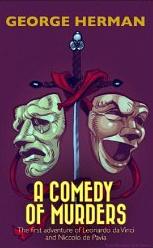
A Comedy of Murders is a richly researched and richly imagined
visit to that amazing time of city-states run by princes, and
explorations of our planet and the sciences, and a church more concerned
with rich coffers than rich souls, and wars fueled by personal
vendettas, and personal vendettas fueled by wars. We meet the Duke of
Milan, the French King, the Pope, minor city-state princes, courtiers
and other hangers-on. The reader does not need to be an expert on these
times or people; the author informatively guides us through them. There are eight books in the series:
Sweet Delicious Madness and the
Hordes of Lidias is Book 3 in Julie Sarff's Kissed in Italy
Mystery Series. This Kindle (mobi) e-book series is pure, silly,
fanciful fun. Julie Sarff is wonderful at setting up comic set pieces. I thought
her funniest sequence was in a Swiss hospital. Lily is given a relaxant
to calm her anxiety after a car accident, but the drug has hallucinatory
consequences. She becomes convinced that her doctor is Swiss tennis
star Roger Federer. So, naturally, she attempts to pluck his uni-brow
into two respectable eyebrows, with bloody results! If you enjoy books in a first-person, rambling style, lots of humor,
clean romance, light mystery, with a strong dose of local Italian
flavor, then the Kissed in Italy Mystery Series is for you. This
Indie-Author is creating a quality series of entertaining, light reads,
with stunning covers! After having read books 1 through 3 I have to say that the humor is
consistently and effortlessly funny. The books are a wonderful way to
spend your free time, leaving you in a much better mood than when you
first sat down. The characters are varied and realistic. The
depictions of fame and the famous on ordinary people ring spot on. And
the accurate descriptions of Italians of all stripes speak of personal
experience, not of cliches. There are four books in The Kissed in Italy Series series: I suggest you purchase books 2 through 4 together, so you get a
complete story; hopefully the author will package them together in
future. Read my
full review at
Italophile Book Reviews. This suspense novel, Murder in Hand, is for
cozy enthusiasts! I love cozy-murder-mysteries, but I have found that
those who don't like them tend to actually loath them. So, only true
fans should take up this book. It is a classic murder mystery with
suspense elements, with the added element of legal expertise from the
Anglo-Italian solicitor amateur detective, Alicia Allen. London, England, is not physically far from Italy,
but it is culturally light-years away. Anglo-Italian Alicia has grown
up spending her summers in Italy, and speaking Italian with her mother
and sister at home. She loves Italian food, great coffee, red wine, her
close family, and the community she creates around her with neighbors
and co-workers. She also loves Pringles potato chips! That must be the
English side of her. ;-) Cozies take their time, so if you are fan, you know
to savor the setting details, and the meanderings, and the theories, and
the relationships. They are all here, true to the genre, along with
multiple murders, investigative trails galore, an exciting ending, and a
romantic Epilog. This is a book I can recommend for Italophiles,
Anglophiles, fans of Traditional British Mysteries, and fans of
Cozy-Murder-Mysteries. Read my
full review at
Italophile Book Reviews. Books in the Alicia Allen Mysteries: A Model Murder (also
reviewed at my Italophile Book Reviews blog) Wilful Murder Murder in Hand Limoncello Yellow is the first book in the
cozy-murder-mystery Franki Amato Mystery Series. The
protagonist, Francesca (Franki) Amato, is a first generation
Italian-(Sicilian)-American in the United States. She grew up in
Houston, Texas, with her parents, brothers, and her very-Sicilian
paternal grandmother. All that wonderful Italian ethnicity enriches
Limoncello Yellow. The private detecting firm that Franki joins is run
by Franki's old friend, Veronica Maggio, another hyphenated Italian.
The two women bonded in college over "all things Italian", and they
enjoy joking together about their ethnicity. The cover of the book is very cute, as is the title
Limoncello Yellow. The review-copy e-book I read had a very
clear layout and is well-edited, with distinct paragraphs that begin
with indents. Franki's parents and grandmother (nonna)
like to play an active part in Franki's life, especially her love-life.
When Franki informs the family she is moving to New Orleans, nonna
likes the idea of her spinster (a zitella at twenty-nine)
grand-daughter going to the city where nonna lived previously:
"There are still a lotta nice Sicilian boys in New Orleans..." Italian
culture has a central role in Franki's and Veronica's identities. Cozy murder mystery romance humor chick-lit: all
these terms fit Limoncello Yellow, a promising start to a fun
Italophile series. Please read my
full review at
Italophile Book Reviews. Delayed Death is Book #1 in the
Temptation in Florence Series, a cozy murder mystery romance series
with a strong dose of humor. The title of the series comes from the
lingerie store that the protagonist, Carlina, owns and runs, Temptation,
on one of Florence, Italy's, premier shopping streets. The Temptation in Florence Series follows
the life, adventures and loves of Italian-American Carlina, and of her
extended eccentric Italian family, many of whom live in apartments in
the same building in central Florence as Carlina and her mother.
Carlina's U.S. American father passed away when Carlina was in her
teens, after which her Italian mother moved back to Italy with Carlina
and her two siblings. The mixed heritage shows in Carlina's unusual sense
of humor that has a rich sense of the absurd. She is also lacking in
ego, which makes Carlina something of a willing doormat for her
strong-willed relations. The family's eccentric members and their whims
and wishes are a never-ending source of amusement for Carlina. While
often treated like the family's Cinderella, Carlina is also a sexy,
saucy, funny thirty-two-year-old woman. When a crisis occurs, right at the beginning of
Delayed Death, and Carlina gives in to her domineering cousin's
wishes, Carlina sets herself on a collision course with police
Commissario Stefano Garini. The English in Delayed Death is easy to read
and well-edited. The cover is very eye-catching, as are the covers of
each book in the series. There are interesting contrasting characters,
lovely Florentine locations, gentle humor, and an entertaining possible
love match that rings true. The story builds nicely and keeps the action varied
with enjoyable interplay between the oddball characters, and especially
between Carlina and Stefano. The Temptation lingerie shop offers lots
of opportunity for laughs, among the panties, bras and thongs. The books in the Temptation in Florence Series: Delayed Death
(Please read my
full review at my
Italophile Book
Reviews site.) Charmer's Death (Also
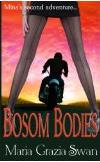
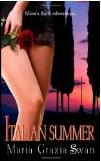
reviewed at Italophile Book Reviews) Banker's Death Expected Death Mina's humor is real plus to this traditionally written, third-person
narrated, clean (cozy) murder-mystery series. Her unpredictable
reactions bring a spontaneity to the story, keeping us guessing
about what will happen next, and what Mina will do or say next. The Mina Calvi books are not quick, one-day reads, about
one-dimensional characters playacting to formulaic conventions. The
books are entertainingly realistic romantic adventure stories, with
mystery and suspense, featuring a complex, growing character, who
reacts with realistic human strength and weakness to her unusual
situations. I look forward to the next one! I review each of the books, without revealing spoilers, on my
Italophile Book Reviews site. Here is the
direct link to that page, with the full reviews, and
illustrations by the famous Italian advertising poster artist
Leonetto Cappiello. The author has another mystery series that features an Italian-immgrant
to the U.S., The Lella York Mysteries Series. I review the first
book in the series at my Italophile Book Reviews site:
Murder Under the Italian Moon.
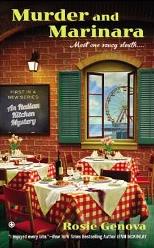
Murder and Marinara by Rosie Genova Murder and Marinara is the first book in
The Italian Kitchen Mystery Series, a cozy-murder-mystery and
romance series set on the Jersey Shore, in the state of New Jersey in
the United States. The series' protagonist is Victoria Renzi. Vic is
our first-person narrator of the book, guiding us through her adventure
with a dry sense of humor. The book starts quickly, expertly setting the
scene, and introducing us to the various characters in the Renzi family,
and to people linked with the family restaurant. The Renzi family jumps off the pages with life,
easy to visualize and easy to understand. If you are from that area of
the world, you will probably enjoy the story even more, since the
locations and people will be instantly recognizable to you. The story moves along swiftly. It is a solid,
by-the-book, cozy-murder-mystery: clean, fun, comforting, with light
humor and light romance. The murder that occurs is a disaster for the Renzis
so Vic gets involved in the investigation to help her family. Vic
questions suspects, ruminates on the case with a side-kick, and
eventually resolves the case with an exciting finish. Murder and Marinara is full of lots of love
for the Jersey Shore and for Italian food and for Italian-American
culture. There are even recipes at the end of the book, including the
titular Marinara Sauce. This is a book for Italophile cozy-enthusiasts! Please visit
my full, illustrated review at Italophile Book Reviews: There are two books in this series so far: 1. Murder and Marinara 2. The Wedding Soup Murder (also
reviewed at my Italophile Book Reviews site)
The Lella York Mysteries series is an entertaining cozy mystery series
featuring the Italian transplanted to California Lella York. She
is a woman of a certain age, volatile, emotional, unpredictable, and
always getting herself into difficulties with the law. One lawman becomes special to her heart and their
relationship becomes one of the many bright spots in this inventive
series. Please read my
full, illustrated review of Murder Under the Italian Moon at
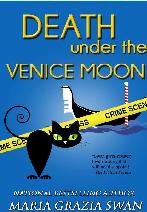
my Italophile Book Reviews site. Please read the
full, illustrated review of Death Under the Venice Moon at
Italophile Book Reviews. (not all the books have been translated yet) Andrea Camilleri is Italy's most famous writer of
gialli. Before he wrote them, he produced them for
television, making the acclaimed Maigret series. But it's
for his Commissario Montalbano that he's most
famous. The books are written in Italian and available in
translation in various languages. Montalbano works in Sicily, and when he's not solving
crimes and arresting bad guys, he's enjoying the beaches, good wine,
great food, and quirky inhabitants of the ancient island. There is
also his girlfriend, Livia, who is treated rather shabbily throughout
the series, as are pretty much all the female partners, actually. The books in the series are: My list of this author's
books at Amazon.com The series has been filmed for Italian television and is
available on DVD. Be prepared for beautiful location filming, some
incomprehensible language, and lots of macho men who lie far too easily to their
women, who are generally-speaking not treated with much respect.
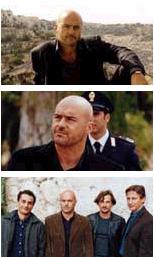
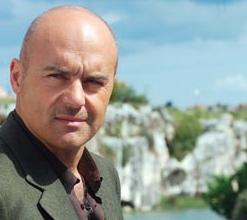
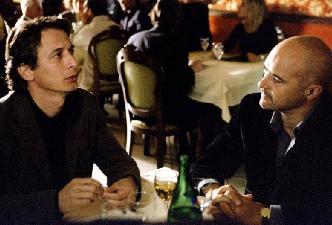
Images from "Il Commissario Montalbano", an Italian
series of film-length episodes based on Andrea Camillieri's police
procedural novels, several of which have been translated into English. The series stars Luca Zingaretti and is a
huge hit in Italy and Germany (a German actress plays his long-suffering
girlfriend).
The Montalbano series is filmed on location in Sicily which brings
stunning locations to the police-dramas. And they score it with
Sicilian music for added flavor.
Dear to Montalbano's heart is eating, especially at his favorite
restaurant with his favorite chef. He's known to lie to colleagues
and girlfriend about his whereabouts to conceal his preference for
eating over their company. Here are some clips via YouTube.
Sicily has beautiful palaces, some of which feature in the
location-shot series. Here is one, but you can find others on my
Palaces of Sicily page. Visit my
Italophile Book Reviews page for this series.
Michele Ferrara is Chief Superintendent of Florence's elite
Squadra Mobile. He tackles the most difficult cases and sticks
with them until all the nasty facts come to light. The author, Michele Guittari, is a retired Italian State Police
Commissioner. His fictional character of Michele Ferrara clearly
walks in the author's footsteps, bringing a verisimilitude to the books
that other police procedural series may lack. These are the books in the series so far, each translated from the
original Italian:
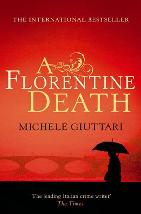
A Florentine Death by Michele Guittari If you are a Florence fan, and who isn't, you will
enjoy the specific streets and buildings that are mentioned throughout
A Florentine Death. There is a very strong sense of place in the
book. Depictions of the Italian character are
exceptionally strong in the book since it is written by an Italian about
Italians, and originally written for an Italian audience. The details about the police investigations are
accurate, thanks to the author being a former head of Florence's
Squadra Mobile. The writing style is very traditional, with
separate strands following the killer and the police, until the moment
the two strands combine near the end of the book. Be forewarned that
some readers might not enjoy the slow style of this classic police
procedural. The narration is in the third-person-limited,
usually from Ferrara's mindset. However, like the English author David
Hewson, whose style I think is similar to Guittari's, we are put into
the mind of the very sick killer, too. We are also treated to sex
scenes, usually disturbing sex scenes, also similar to David Hewson's
books. Negatives about A Florentine Death are not
really negative, but observations about things I did not particularly
enjoy. First, I felt that the story was very male dominated, with the
female characters shallowly or stereotypically drawn and suffocated in a
macho society. Second, the plot centers around homosexuality, which in
Italian society seems quite behind-the-times compared to my
understanding and upbringing. Please read my
full review at
Italophile Book Reviews. Marco "Alligator is a Private Investigator with an ex-con and blues
singer past. True to
his roots, his cases are rough, seamy and full of hidden Italy.
His home base is Venice. From
the Book's Description of The Master of Knots:
"Alligator—ex-convict turned private detective—finds himself pulled into
a disturbing case involving an Italy known to few. Helena and
Mariano Giraldi lead a secret double life in Italy's clandestine S&M
scene. When Helena is abducted, her husband approaches Alligator for
help. But Mariano seems more worried about losing his reputation than
seeing his wife again.
'As Alligator investigates, he uncovers a world in which brutality,
treachery, and passion go hand in hand. Behind Helena's abduction is a
shadowy figure known as The Master of Knots—who proves to be as powerful
as he is psychotic. As more members of the S&M underground disappear,
Alligator races desperately against time to find his true identity."
Books in the Alligator Series (not all have been translated yet):
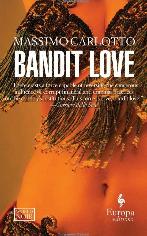
Bandit Love by Massimo Carlotto Bandit Love is book three in The
Alligator Series, a series of noir crime novels for adults featuring
Marco "The Alligator" Buratti, an ex-con turned unofficial private
detective. The books are translated from the original Italian.
Bandit Love features every seedy character one can imagine from the
underbelly of society. I felt I needed a shower after reading this
book, to wash off the filth. Set in northeast Italy, with Marco The Alligator
based in Padova (Padua), the reader is treated to a ringside seat as
Eastern European gangsters fight it out for territory and influence in
Italy. The Italian gangsters look like amateurs by comparison. The first person account by Marco The Alligator is
written long after the fact, describing an adventure that changed his
life, and the lives of his two partners in crime and business: fellow
ex-cons Max the Memory and Old Rossini. The narrative style is
hard-boiled private investigator. The overall tone of Bandit Love is jaded,
cynical, male humor, but the women in the novel are, surprisingly, both
victims and victimizes, but most strikingly the victims of violence. There is a non-linear timeline that keeps the
reader jumping, and there is lots of atmosphere from the criminal world,
with gangsters of all sorts and types. The biggest problem I have with Bandit Love
is that there is no ending. There is no satisfying resolution to the
"case". Perhaps the author is setting up the next book in the series?
This book is only about 140 pages long. I reads more like the first
half of a complete book, the second half of which has not yet been
released. Please read my
full review at
Italophile Book Reviews. The De Luca trilogy is a historical crime trio about Commissario De
Luca during the Fascist era through to the post WWII era. Carte
Blanche: "April 1945, Italy. Commissario De Luca is
heading up a dangerous investigation into the private lives of the rich
and powerful during the frantic final days of the facist regime. The
hierarchy has guaranteed De Luca their full cooperation, just so long as
he arrests the "right" suspect. The house of cards built by Mussolini in
the last months of WWII is collapsing and De Luca faces a world mired in
sadistic sex, dirty money, drugs and murder." The Damned Season:
"It is 1946. De Luca suffers from insomnia and has lost his appetite.
He's got problems with women and a case that he can't crack. In this
second installment of the heralded De Luca trilogy, the
Commissario is posing as a certain Giovanni Morandi to avoid reprisals
for the role he played during the fascist dictatorship. Exposed by a
member of the partisan police, De Luca is forced to investigate a series
of brutal murders, becoming a reluctant player in Italy's postwar power
struggle." Via delle Oche: "It is 1948. Italy’s fate is
soon to be decided in bitterly contested national elections. A man has
been found dead in via delle Oche, at the center of Bologna’s notorious
red light district. Commissario De Luca is unwilling to look the other
way when evidence in the man’s death points to local politicians and
members of the Bologna police force. The brutal worlds of crime and
politics conspire once again, and in this third and final book in the De
Luca trilogy, winner of both the Italian Mystery Award and the
Scerbanenco Prize, violence, power, and sex combine to create an
atmosphere that becomes more volatile as the trilogy reaches its
shocking finale." Almost Blue: "A serial killer is terrorising the
students of Bologna. Rookie female detective Grazia Negro is determined
to solve the case."
"River of Shadows is the first of a series of thrillers featuring
Commissario Soneri, now the central figure of one of Italy's most
popular television dramas." ("Nebbie e delitti" or "Fog and
crimes"). Soneri is said to be a bongustai, which is pretty much
obligatory in Italy, no? The books in the series of 14 Italian books
that have been translated so far into English:
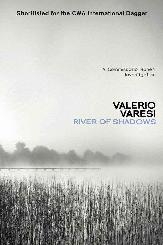
River of Shadows by Valerio Varesi River of Shadows is the first book in a
police-procedural series set in the Po River Valley of Northern Italy,
featuring the senior police officer Commissario Soneri. The book
is translated from the original Italian. River of Shadows is
slow-moving, atmospheric about the Po River area, and with an eye more
in the past than in Italy's present-day. Third-person limited narration puts us in the head
of Commissario Soneri, which is not necessarily a nice place to
be. He is a difficult character: rude, uncommunicative, moody,
selfish, fixated, irritable, brusque, and petty. Under the influence of that addictive
irritability-inducing curiosity, Soneri pursues his case without a
thought for anyone else. Commissario Soneri's primary release is
food and wine, so we are treated to all his menus. Commissario Soneri's secondary release is
the most discordant feature of the book. A cop-groupie woman has
latched onto Soneri, his high rank in the police force a turn-on. She
uses him throughout River of Shadows to indulge her other big
turn-on, having sex in crime scenes and in the homes of crime victims. Italy's past battles between Communists and
Fascists plays a central role in the story of River of Shadows.
While the ending of River of Shadows does
have Commissario Soneri getting the killer, it is not a
satisfying ending. An epilogue would have added greatly to the sense of
closure for this reader. The ending, as it is, is too abrupt, without
tying up loose ends, and without letting us now how the resolution of
the case is treated by the media, and by Soneri's bosses, and the
boatmen, all three of whom have become elements in the story. Please read my
full review at
Italophile Book Reviews. There are 11 books so far in Italian about Inspector Cataldo, but
only the first one has been translated so far and it is called The
Criminal Summer. Cataldo is Sicilian but works in Modena.
A reviewer describes him thus: "He's tall and blonde, although
from Sicily, and does not speak dialect. He never rushes an
interview, waiting out the silences with patience. His fondness for
surrealist art suggests an intellectual bent." The Book Description:
"In a quiet holiday town in the Italian Apennines, during a torrid
summer, a string of gruesome deaths stirs up trouble in the local
community. A suspected suicide, which Inspector Cataldo is called
in to investigate, brings to the surface shady events belonging to the
past, and a mysterious foreigner shakes up the delicate social balance
of a group of friends who have a lot to hide." There are 4 books in the lawyer Guido Guerrieri series so far.
Here is a description of how the first book begins:
"At the beginning of the novel, Italian lawyer Guido Guerrieri splits
from his wife and somewhat loses track of his life. He moves into a flat
where he knows no one, drinks a bit, and generally doesn't take very
good care of himself. Then he gets involved in a controversial trial. "
The series is written by a lawyer, so there is much verisimilitude.
Involuntary Witness is the first book in a series featuring Italian
trial lawyer Guido Guerrieri, who lives in Bari, Italy. The book is a
translation from the original Italian into British English, at least my
copy of the book was in British English. The author, Gianrico Carofiglio, is a former
Italian judge, so the legal aspects of his novels are very accurate, and
are interesting in their own right due to the complexity of the Italian
Justice System, which the author explains clearly for the reader. The book has a first-person narration by the
protagonist, forty-year-old civil and criminal trial lawyer Guido
Guerrieri, who recounts the events that make up his mid-life crisis,
including the lost-cause court case that contributes to his redemptive
recovery. The author has filled his protagonist with a wicked
sense of humor, which makes the book very entertaining. Dialog is often
embedded in the narration, reminiscent of J.D. Salinger's Holden
Caulfield from The Catcher in the Rye. If you have read any John Grisham novels, you might
recognize the pattern of the down-and-out lawyer wracked by
self-loathing who redeems himself by winning an impossible case for a
just cause. Are you a Nick Hornby fan, author of the novels
High Fidelity and About a Boy? If you are, you might
recognize the spoiled, self-indulgent man-boy protagonist who suffers a
crisis that pushes him to mature out of his prolonged puberty into full
manhood. Did I enjoy reading Involuntary Witness?
Yes, I did, mainly because of the Italian cultural setting and because
of the humor in the book. I had a few reservations which are explained
in my full review. Read my
full review at
Italophile Book Reviews. This series is a series with an identity crisis: they are
psychological novels dressed up as police procedurals but marketed as
cozy mysteries. Please read my see
my full and illustrated review of the first book in this series on
my Italophile Book Reviews site. From
the first book's description:
"Florence, summer 1963. Inspector Bordelli is one of the few
policemen left in the deserted city. He spends his days on routine work,
and his nights tormented by the heat and mosquitoes. Suddenly one
night, a telephone call gives him a new sense of purpose: the suspected
death of a wealthy Signora.
"Bordelli rushes to her hilltop villa, and picks the locks. The old
woman is lying on her bed - apparently killed by an asthma attack,
though her medicine has been left untouched. With the help of his young protege, the victim's eccentric brother, and a semi-retired petty thief,
the inspector begins a murder investigation." These are
the books in the series so far:
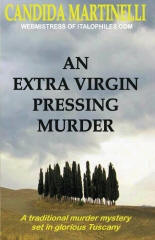
An Extra Virgin Pressing Murder by Candida Martinelli Candida has written a traditional country-house cozy-murder-mystery with lovely
Tuscan sights, hunky Italian love interests, mysteries, laughs and tugs on the
heartstrings. It is in the style of Ngaio Marsh and Dorothy L. Sayers mystery
novels, a light touch with little gore or violence, lots of suspect characters and a
bit of romance. Julie gladly leaves her retirement home to attend a protégée’s wedding in
Tuscany. But when someone is murdered at her welcome party, and the chief
suspect is the Italian fiancé, Julie finagles her way into working with the
local Marshal to discover the truth. The reader follows Julie along her not-always-smooth path to discover all she
can about the possible suspects and motives for the murder. There is some danger
for Julie, and for the others involved in the case. The resolution brings
clarity and relief, as well as a new beginning for Julie, in Italy. To read Part I (of 8 Parts) which is 6 Chapters (of 40 Chapters),
visit the book's page on this website or
at the
book's website.
It is available from
Amazon.com
The
Kindle Version
Also see my pages:
Historical Fiction
set in Italy
This link goes to the Amazon.com Kindle page for Italy
Mysteries. There is a
website dedicated to mysteries set in Italy. It is not the easiest
site to navigate. But it has some nice interviews with the
authors.


Gialli
- Mystery Books and Police Thriller Series set in Italy




Series Written in English
Edward
Sklepowich and his Urbino MacIntyre


Donna Leon and her Guido
Brunetti

 By
Its Cover by Donna Leon
By
Its Cover by Donna Leon
Sara Poole's Francesca Giordano
 Poison
by Sara Poole
Poison
by Sara Poole
Beverle Graves
Myers and her Tito Amato
 Interrupted
Aria by Beverle Graves Myers
Interrupted
Aria by Beverle Graves Myers
David Hewson's Nic Costa
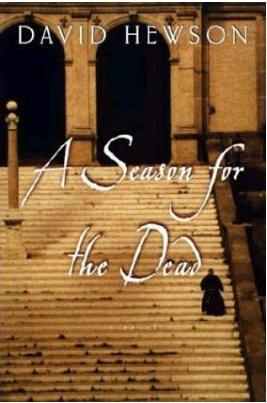 A Season for the Dead
Christobel Kent
and her Sandro Cellini
Conor
Fitzgerald and his Commissario Alec Blume
Iain Pears and his
Jonathan Argyll

Magdalen Nabb and
her Marshal Guarnaccia


Michael Dibdin and his
Aurelio Zen
Tobias Jones / P.I.
Castagnetti
 Death
of a Showgirl by Tobias Jones
Death
of a Showgirl by Tobias Jones
Lucretia Grindle /
Inspector Pallioti
Grace Brophy / Alessandro
Cenni
Timothy Williams / Piero
Trotti
Northern Italy, 1978: Commissario Piero Trotti, trusted senior
police investigator in an anonymous provincial city off the River
Po, has two difficult cases to solve. An unidentified, dismembered
body has been found in the river, and it's up to Trotti to figure
out who the murder victim is.
Williams' first novel is a gripping, literary thriller with vividly
drawn characters and lush descriptions reminiscent of crime masters
Raymond Chandler and Nicolas Freeling. For the first time, the
Commissario Trotti series is available to readers across the US.
 A
reviewer with the Italy's newspaper Corriere della Sera describes
this series as being "free from prejudices and clichés, and being
realistic and well-informed", praise indeed coming from an Italian.
And here is a
link to the International Noir blog's rave reviews of the first two
books in the series. Here is a quote from their reviews:
A
reviewer with the Italy's newspaper Corriere della Sera describes
this series as being "free from prejudices and clichés, and being
realistic and well-informed", praise indeed coming from an Italian.
And here is a
link to the International Noir blog's rave reviews of the first two
books in the series. Here is a quote from their reviews:

Paul Adam / Gianni Castiglione
Simon Buck / Peter White
Marshall Browne / Inspector
Anders
Timothy Holme / Achille Peroni
John Galavan's
Italian Art Theft Series - Kindle Series
 I've
read the 10th book in the series, New Man, New Troubles. It
is an old-fashioned novel in the style of Graham Greene or John LeCarre.
The author moves deftly between characters, making each rounded and
human, then he moves on to the next character in the web-like story. By
the end of the book, the strands come together neatly, and we have come
to know a dozen or so characters quite well.
I've
read the 10th book in the series, New Man, New Troubles. It
is an old-fashioned novel in the style of Graham Greene or John LeCarre.
The author moves deftly between characters, making each rounded and
human, then he moves on to the next character in the web-like story. By
the end of the book, the strands come together neatly, and we have come
to know a dozen or so characters quite well.
1- To Roma! To Roma!
2- Hidden in Florence
3- Stealing Donatello
4- Loyalist Return
5- Perfect Imposters
6- Judgment Day
7- Back to Roma
8- Mamma, No!
9- Everywhere Enemies
10- New Man, New Troubles
11- German Blitz
12- Got Lucky
13- Masterpiece Mix-Up
14- Big Day
15- Favors
16- Are you Dead?
17- They Never Quit
18- Renaissance Women
20- Promises, Promises
21- Becoming God
22- Sisters
23- Protecting Papa
24- Last Job
Margaret Moore's
Dr. Ruggero di Girolamo
Diane A. S.
Stuckart's Leonardo Da Vinci
'On a royal whim, Ludovico Sforza, the Duke of Milan, orders a living
chess game to be enacted by members of his own court. Court Engineer
Leonardo da Vinci conjures the spectacle in a single night, but his
latest success turns bitter when one of the "pieces"-the Duke's
ambassador to France-is murdered.
'Given the brutal climate of court politics, even the Duke's closest
advisors are suspect. As an outsider, Leonardo is the only man Sforza
can trust to conduct the investigation. With his scrupulous eye for
detail, and young apprentice Dino gathering information unnoticed,
Leonardo uncovers a vile nest of secrets-while danger, like an ill
humor, rises to the surface.
But the most surprising secret of all may be the true identity of his
most talented, most trusted apprentice."
George Herman's Leonardo da Vinci and Niccolo da Pavia Renaissance
Mystery Series
 A
Comedy of Murders by George Herman
A
Comedy of Murders by George Herman
Have you ever seen Richard Lester's film The Three Musketeers? While
reading A Comedy of Murders, I found myself playing a film of the
story in my mind, in the style of Lester's filming of the classic
historical adventure tale. Both tales are told as bawdy, silly,
historical farce, in which real people from the past are imagined as
flawed, corrupt, pompous idiots who are lost in circumstances beyond
their control.
There are some characters who rise above others in their moral
fortitude, and one of those is the artist-architect Leonardo da Vinci.
The author weaves Leonardo's life and work into the story, and from
about page ninety, Leonardo plays a large role in the story. A Comedy
of Murders is actually the first novel in a series of comic novels
that feature Leonardo da Vinci and his friend, the fictional Niccolo de
Pavia, a diminutive scholar and courtier.
There are eight books in the series, all historical comedies for adults
set during the height of the Italian Renaissance, full of courts,
castles, dungeons, torture, gossip, courtesans, rivalries, out-sized
egos, rampant libidos, political scheming, erudite learning, monumental
building project, and the creation of timeless art.
I would advise a reader to sit back and savor the author's masterful
recreation of that raucous, vibrant, violent, cruel and creative era. He
is especially knowledgeable about Renaissance warfare, and Leonard da
Vinci's work. Do not expect a "mystery novel". Be open to the comic
historical novel, and let history wash over you. The author makes us a
visitor to a Renaissance city-state's court, and puts us in the middle
of all the nonsense.
Read my
full review at
Italophile Book Reviews.
 Sweet Delicious Madness and the Hordes of Lidias
The protagonist of the series, U.S. ex-pat Lily Bilbury, narrates her
adventures in northern Italy, where she lives in a small town on the
shores of Lago Maggiore. Her scatter-brained, fantasy-filled, very
funny ramblings describe the adventures of Lily, and her two best
girlfriends, and an assorted group of extras, as they attempt to deal
with the problems and mysteries that their lives throw at them.
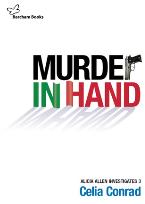
Murder in Hand by Celia Conrad
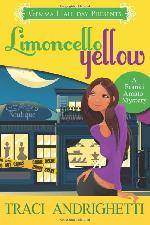
Limoncello Yellow by Traci Andrighetti
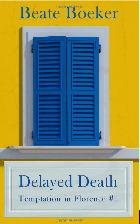
Delayed Death by Beate Boeker
My only reservation is the abrupt ending. I wanted to hear from the
killer how the killings were done and why they were committed. The
love-story felt unresolved, too, at the end. Perhaps the author wanted
to leave that for the next book in the series? I'll have to read them
to find out.
 Mina's
Adventures Series by Maria Grazia Swan
In this richly imagined series, set in the recent past, Mina Calvi,
an Italian-born woman, an immigrant to The United States, has to
deal with some overwhelming events. Her self-deprecating humor and
her friends, loyal to the occasionally clueless young woman, help
her survive.
Mina's
Adventures Series by Maria Grazia Swan
In this richly imagined series, set in the recent past, Mina Calvi,
an Italian-born woman, an immigrant to The United States, has to
deal with some overwhelming events. Her self-deprecating humor and
her friends, loyal to the occasionally clueless young woman, help
her survive.
The author has made Mina a refreshingly realistic young woman. Not
a silly, kick-ass, one-dimensional character favored by so many
publishers these days, Mina is a young woman who has yet to find her
place in life. She is moderately educated, foreign to many American
ways, gullible, and has a wonderful sense of the ridiculous.
I have read, and enjoyed, all three books in The Mina's
Adventures Series:
 Murder
Under the Italian Moon and Death Under the Venice Moon -
The Lella York Mysteries by Maria Grazia Swan
Murder
Under the Italian Moon and Death Under the Venice Moon -
The Lella York Mysteries by Maria Grazia Swan
Series Translated from Italian
Andrea
Camilleri and his Commissario Montalbano

Michele Guittari's
Michele Ferrara
Massimo Carlotto / Marco "Alligator"
Buratti
Carlo Lucarelli /
Commissario De Luca and Inspector Grazia Negro
Valerio Varesi /
Commissioner Soneri
Luigi Guicciardi /
Inspector Cataldo
Gianrico Carofiglio /
Guido Guerrieri
 Involuntary
Witness by Gianrico Carofiglio
Involuntary
Witness by Gianrico Carofiglio
Marco Vichi / Commissario Bordelli
A Cozy
Giallo by Candida Martinelli
Amazon.com for paperback (11.99$) and
large-type paperback (14.99$) and mobi-Kindle (3.99$ in U.S.)
CreateSpace for paperback (9.99$ with code
AHY2J7GU) and large-type paperback (12.99$ with code AHY2J7GU)